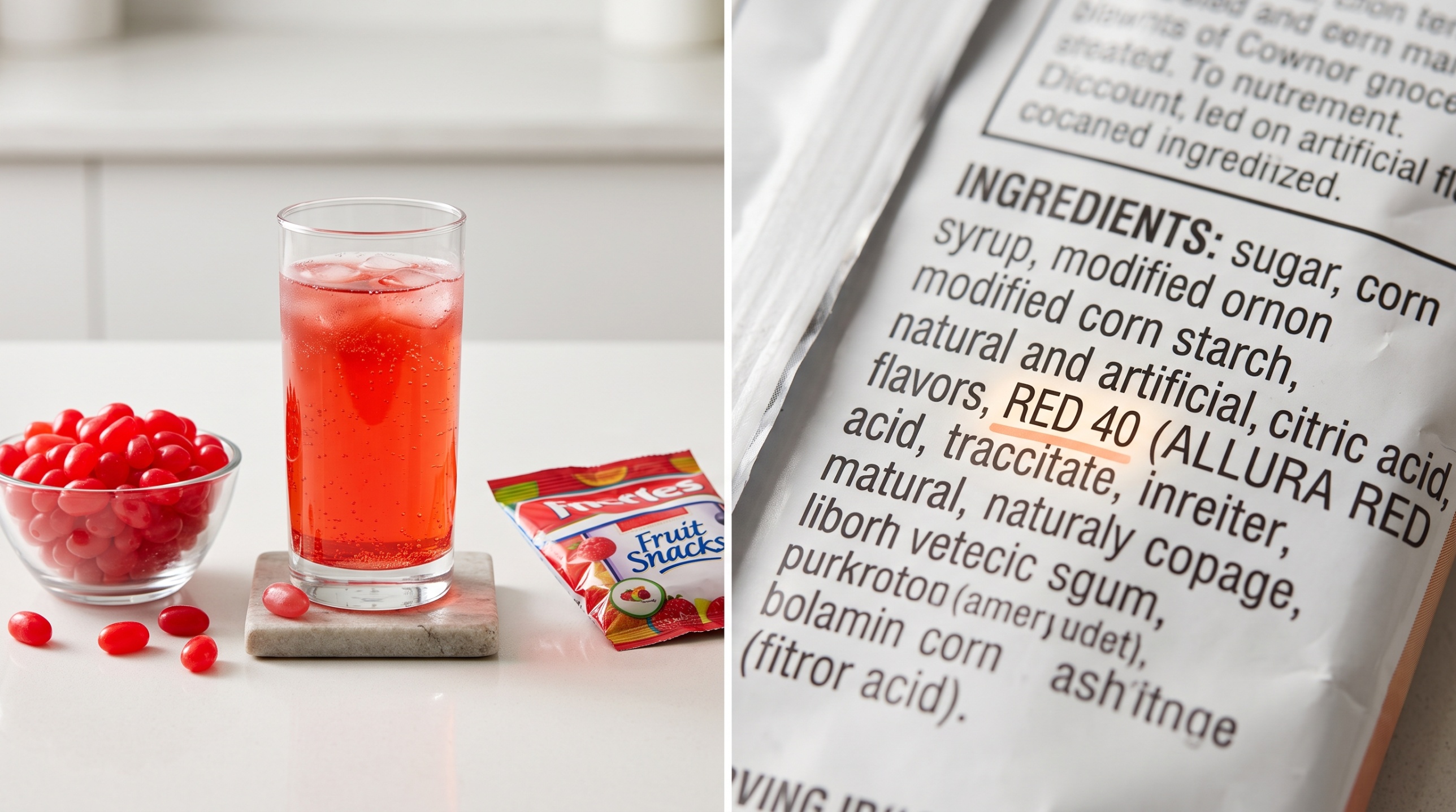
15 Hidden Ingredients Parents May Want to Limit in Kids’ Foods
Brightly colored cereals, fruit snacks, flavored yogurts, crackers, juices, and granola bars can make a grocery trip feel overwhelming. Claims such as “made with real fruit,” “whole grain,” or “no artificial flavors” may sound reassuring, but the fuller story is on the back of the package: the ingredient list and Nutrition Facts label.
Many packaged foods use ingredients to improve taste, texture, color, or shelf life. Some are worth limiting because frequent intake can lower overall diet quality; others are ingredients some families choose to reduce based on personal preference or emerging research. No single ingredient makes a food healthy or unhealthy. This guide can help you make more confident choices most of the time.
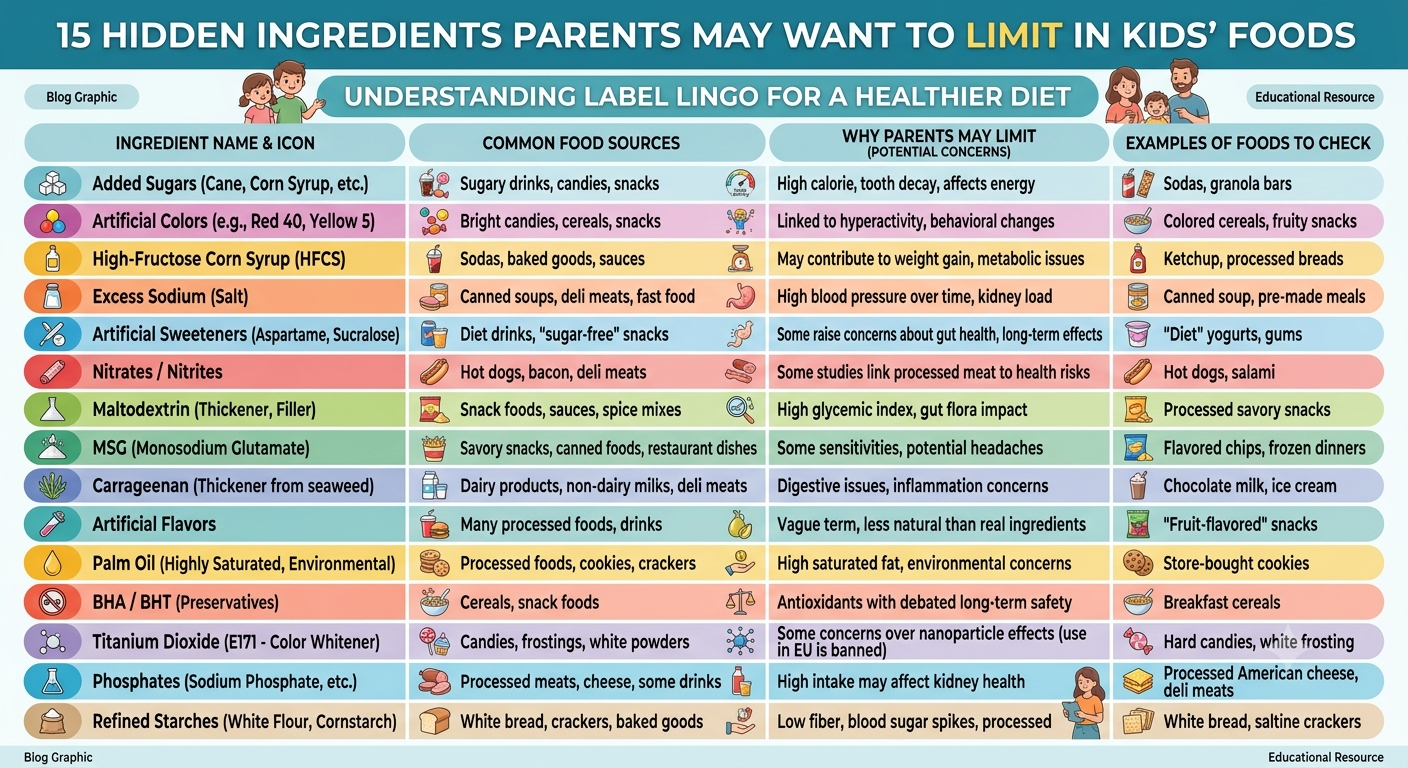
A simpler way to use this guide
You do not need to avoid every food on this list. Start by reading labels, comparing two similar products, and choosing options with less added sugar and sodium, more fiber, and a shorter list of recognizable ingredients whenever practical.
15 ingredients to understand on kids’ food labels
Added Sugars
Added sugars are sweeteners introduced during processing, rather than sugars naturally present in fruit or milk. Common label names include cane sugar, corn syrup, high-fructose corn syrup, brown rice syrup, dextrose, maltose, glucose, fructose, agave, molasses, honey, and fruit juice concentrate.
Common foods
Breakfast cereals, flavored yogurt, granola bars, juice drinks, cookies, and chocolate milk.
Why some parents limit it
Frequent high intake can add calories, contribute to dental cavities, and crowd out nutrient-dense choices. The American Heart Association recommends that children ages 2–18 have less than 25 grams (about 6 teaspoons) of added sugar a day.
Consider instead: Choose unsweetened applesauce, plain yogurt with fruit, or oatmeal topped with berries.
Artificial Food Colors
Synthetic dyes such as Red 40, Yellow 5, Yellow 6, Blue 1, Blue 2, and Green 3 are added to make foods more visually appealing.
Common foods
Fruit snacks, candy, frosting, colored cereals, sports drinks, ice pops, and colored beverages.
Why some parents limit it
Approved colors are permitted within specified limits, but research suggests some children may be sensitive to certain dyes. Research findings are mixed, and not all children are affected.
Consider instead: If preferred, look for beet juice, turmeric, paprika, spirulina, purple sweet potato, or annatto as color sources.
High-Fructose Corn Syrup
High-fructose corn syrup (HFCS) is an inexpensive sweetener that blends easily into processed foods and beverages.
Common foods
Soda, fruit drinks, sweetened yogurt, ketchup, barbecue sauce, and packaged desserts.
Why some parents limit it
Evidence suggests HFCS and table sugar have similar metabolic effects in comparable amounts. The bigger concern is total added sugar, not one specific source.
Consider instead: Compare the added-sugars line across similar products and choose the lower-sugar option when practical.
Sodium
Sodium is essential, but it can add up in foods that do not taste especially salty.
Common foods
Bread, cheese, frozen meals, chicken nuggets, pasta sauce, crackers, and sandwich meats.
Why some parents limit it
Many children consume more sodium than recommended. Comparing similar products is an easy way to support a lower-sodium eating pattern.
Consider instead: Compare labels for bread, sauces, crackers, and frozen meals; select the lower-sodium option when it suits your family.
Artificial Sweeteners
Aspartame, sucralose, saccharin, acesulfame potassium (Ace-K), and neotame are used to reduce sugar while retaining sweetness.
Common foods
Sugar-free drinks, diet soda, sugar-free gelatin, chewing gum, and reduced-sugar desserts.
Why some parents limit it
Approved sweeteners are considered safe within acceptable daily intake levels. Long-term effects of routine use in children continue to be studied, so many experts emphasize water, milk, and whole foods first.
Consider instead: Offer water, plain milk, and naturally flavored foods more often than heavily sweetened or artificially sweetened products.
Nitrates and Nitrites
These preservatives help prevent bacterial growth and keep processed meats their familiar color.
Common foods
Hot dogs, bacon, ham, sausage, pepperoni, and deli meats.
Why some parents limit it
Health organizations generally recommend limiting processed meats and choosing fresh, minimally processed protein sources more often.
Consider instead: Try fresh chicken, turkey breast, beans, eggs, fish, or lentils for everyday meals.
Maltodextrin
Maltodextrin is a starch-derived carbohydrate used to improve texture or bulk in processed foods.
Common foods
Chips, instant soups, sports drinks, protein powders, candy, and seasoning mixes.
Why some parents limit it
It is FDA-approved and generally recognized as safe, but it has a high glycemic index and contributes refined carbohydrate with limited nutritional value.
Consider instead: Favor products where whole grains, fruits, vegetables, or legumes are the leading ingredients.
Monosodium Glutamate (MSG)
MSG boosts savory flavor in many prepared foods.
Common foods
Instant noodles, frozen dinners, chips, soup mixes, restaurant foods, and seasoning blends.
Why some parents limit it
Scientific reviews find MSG generally safe at typical dietary levels. Some people report temporary symptoms after large amounts, though research has not consistently established a direct cause-and-effect relationship.
Consider instead: If your family prefers simpler ingredient lists, compare labels and choose foods flavored with herbs, spices, and recognizable ingredients.
Carrageenan
Carrageenan is extracted from red seaweed and is used to improve texture.
Common foods
Chocolate milk, ice cream, cottage cheese, plant-based milk, yogurt, whipped cream, and puddings.
Why some parents limit it
Food-grade carrageenan is distinct from degraded carrageenan (poligeenan), which is not used in foods. Food-grade carrageenan is considered safe by the FDA and many international authorities when used as intended, although some families choose alternatives while research continues.
Consider instead: Products may use guar gum, pectin, agar-agar, or locust bean gum instead.
Artificial Flavors
Artificial flavors are chemically created flavoring substances designed to imitate familiar tastes and hold up during processing.
Common foods
Candy, soda, cookies, breakfast cereals, fruit snacks, ice cream, and snack cakes.
Why some parents limit it
Approved flavors undergo safety evaluations, but labels do not usually specify every compound in a flavor blend. Some families prefer more recognizable flavor sources.
Consider instead: Look for products flavored with real fruit, spices, cocoa, vanilla, or other familiar ingredients.
Palm Oil
Palm oil is stable, affordable, and shelf-stable, which makes it common in packaged foods.
Common foods
Cookies, crackers, peanut butter, chocolate spreads, instant noodles, and frozen desserts.
Why some parents limit it
Palm oil is not inherently harmful, but it contains more saturated fat than many vegetable oils. Some shoppers also consider the environmental impacts associated with palm oil production.
Consider instead: When available, consider foods made with olive oil, avocado oil, high-oleic sunflower oil, or canola oil.
BHA and BHT
BHA and BHT are antioxidants that help fats stay fresh and prevent foods from becoming rancid.
Common foods
Breakfast cereals, potato chips, chewing gum, snack mixes, and packaged baked goods.
Why some parents limit it
They are allowed at regulated levels. Some animal studies of high-dose exposure have prompted ongoing scientific discussion, so some families prefer naturally preserved products.
Consider instead: Look for mixed tocopherols (vitamin E), ascorbic acid (vitamin C), or rosemary extract.
Titanium Dioxide
Titanium dioxide is a white coloring agent that has been used to brighten foods.
Common foods
Candy, frosting, chewing gum, powdered doughnuts, and cake decorations.
Why some parents limit it
It remains permitted under specified conditions in the United States, while the European Union no longer authorizes it as a food additive because of unresolved genotoxicity questions. Human evidence remains inconclusive.
Consider instead: Choose products without titanium dioxide when a comparable option is available.
Phosphates
Added phosphates improve texture, retain moisture, and extend shelf life.
Common foods
Chicken nuggets, frozen meals, processed cheese, soft drinks, and deli meats.
Why some parents limit it
Phosphorus is essential, but added phosphates in processed foods are absorbed more readily. For most healthy children, occasional intake is not a concern; clinicians may advise limits for certain kidney conditions.
Consider instead: More whole and minimally processed foods naturally reduce exposure to added phosphates.
Refined Starches
Modified food starch, corn starch, potato starch, and tapioca starch can improve texture and shelf life.
Common foods
Crackers, instant soups, frozen meals, sauces, and packaged desserts.
Why some parents limit it
Refined starches usually provide less fiber and fewer nutrients than intact whole grains.
Consider instead: Choose products with oats, whole wheat, quinoa, or brown rice near the top of the ingredient list.
Quick comparison table
| Ingredient | Common purpose | A practical next step |
|---|---|---|
| Added Sugars | Sweetener | Compare products and choose an alternative when it works for your family. |
| Artificial Food Colors | Coloring | Compare products and choose an alternative when it works for your family. |
| High-Fructose Corn Syrup | Sweetener | Compare products and choose an alternative when it works for your family. |
| Sodium | Flavor and preservation | Compare products and choose an alternative when it works for your family. |
| Artificial Sweeteners | Sweetener | Compare products and choose an alternative when it works for your family. |
| Nitrates and Nitrites | Preservation and color retention | Compare products and choose an alternative when it works for your family. |
| Maltodextrin | Thickener and filler | Compare products and choose an alternative when it works for your family. |
| Monosodium Glutamate (MSG) | Flavor enhancer | Compare products and choose an alternative when it works for your family. |
| Carrageenan | Thickener and stabilizer | Compare products and choose an alternative when it works for your family. |
| Artificial Flavors | Flavoring | Compare products and choose an alternative when it works for your family. |
| Palm Oil | Fat and texture | Compare products and choose an alternative when it works for your family. |
| BHA and BHT | Preservatives | Compare products and choose an alternative when it works for your family. |
| Titanium Dioxide | Coloring | Compare products and choose an alternative when it works for your family. |
| Phosphates | Texture, moisture, and preservation | Compare products and choose an alternative when it works for your family. |
| Refined Starches | Texture and thickening | Compare products and choose an alternative when it works for your family. |
Smart grocery shopping tips for parents
Read the ingredient list
Ingredients appear in descending order by weight. If a form of sugar is one of the first few ingredients, it may be a meaningful part of the product.
Compare similar products
A few seconds comparing two brands can reveal less added sugar, lower sodium, more fiber, or fewer additives.
Choose whole foods more often
Fruit, vegetables, plain yogurt, oats, beans, eggs, and whole-grain bread naturally contain fewer additives.
Keep packaged foods in perspective
Processed foods can fit into a healthy pattern. The goal is progress and balance—not eliminating every convenience food.
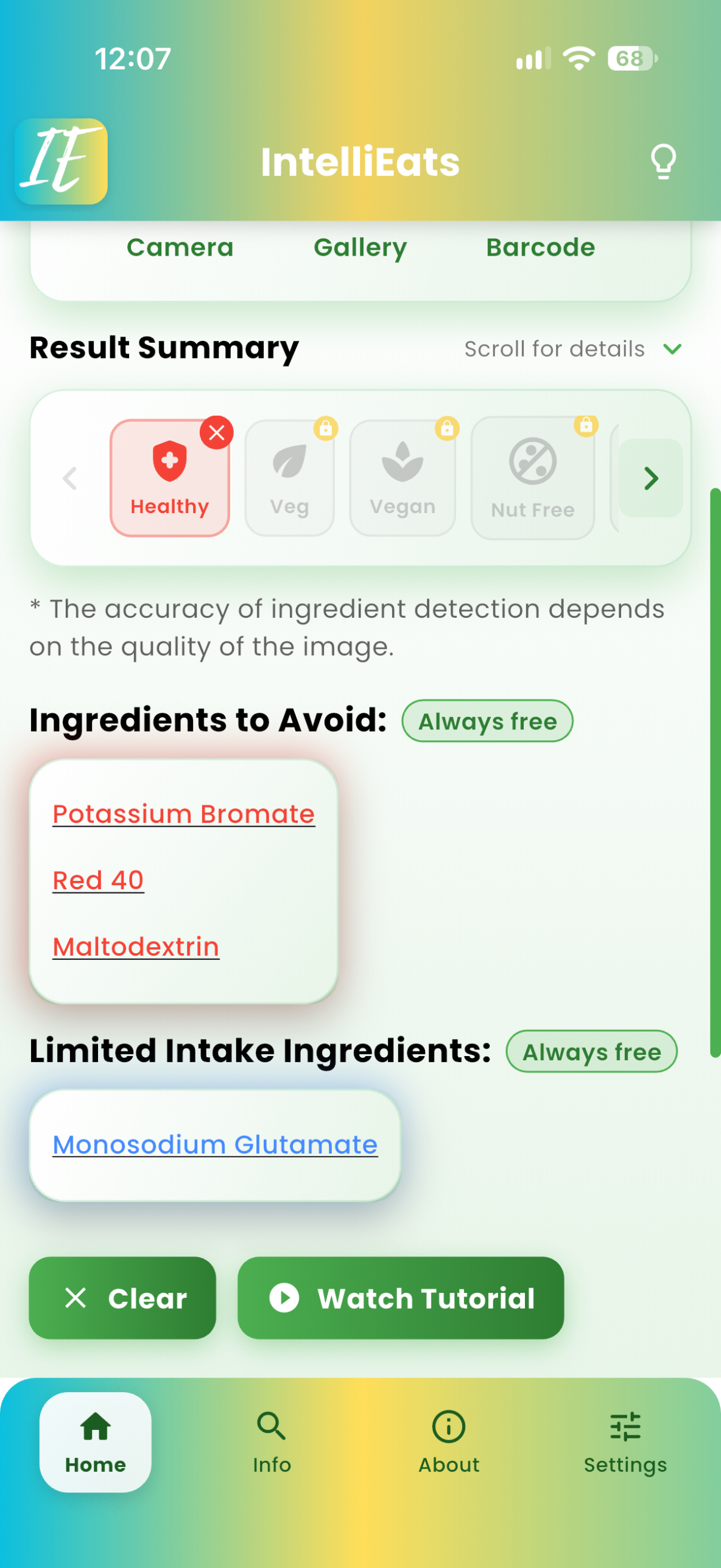
Use IntelliEats to scan ingredients
When you are short on time, scan a package with IntelliEats to quickly spot ingredients you may want to avoid or limit. Review the result alongside the label to compare options with more confidence in the grocery aisle.
Frequently asked questions
Are all food additives harmful?
No. Additives can help prevent spoilage, improve food safety, and maintain quality. Most approved additives have undergone safety evaluations. Families may still choose to limit certain additives based on personal preferences or emerging research.
Should I stop buying all processed foods?
Not at all. Frozen vegetables, canned beans, plain yogurt, and whole-grain bread are all processed foods that can be nutritious. Aim to compare options and choose more minimally processed foods when practical.
Is organic food free from additives?
Organic products follow specific standards and generally use fewer synthetic additives, but they can still contain added sugars, sodium, and certain approved additives. Reading the label is still useful.
What is the quickest way to check ingredients while shopping?
Label reading gets easier with practice. When you are short on time, an ingredient-scanning app such as IntelliEats can help you identify ingredients and compare products in the grocery aisle.
Final thoughts
No single ingredient determines whether a food is healthy or unhealthy. Your child’s overall eating pattern over time matters most.
Rather than aiming for perfection, offer a variety of fruits and vegetables, choose whole grains more often, compare labels for packaged foods, limit foods high in added sugars and sodium, encourage water over sugary drinks, and teach children label-reading skills as they grow.
References
- U.S. Food and Drug Administration (FDA). Food Additives & Ingredients and Nutrition Facts Label.
- U.S. Department of Agriculture and U.S. Department of Health and Human Services. Dietary Guidelines for Americans, 2025–2030.
- American Heart Association. Added Sugars and Children’s Health.
- American Academy of Pediatrics. HealthyChildren.org nutrition resources.
- World Health Organization. Healthy Diet Fact Sheet.
- European Food Safety Authority. Scientific opinions on food additives, food colors, and titanium dioxide.
- National Institutes of Health, Office of Dietary Supplements.
- Food Allergy Research & Education (FARE). Food labeling and allergens.
Research & Regulatory Further Reading
The sources below provide background on food labeling, regulation, and research relevant to this topic. They do not establish that any individual ingredient is harmful at typical food exposure levels.
Medical Disclaimer
The information in this article is provided for educational purposes only and is not intended as medical, nutritional, or dietary advice. Ingredients approved by regulatory authorities are considered safe when used within established limits. Always consult a qualified healthcare professional or registered dietitian for guidance tailored to your personal health needs. See our Editorial Policy to learn how we research and review our content.