Is Red 40 Safe? What Science Says About This Food Dye
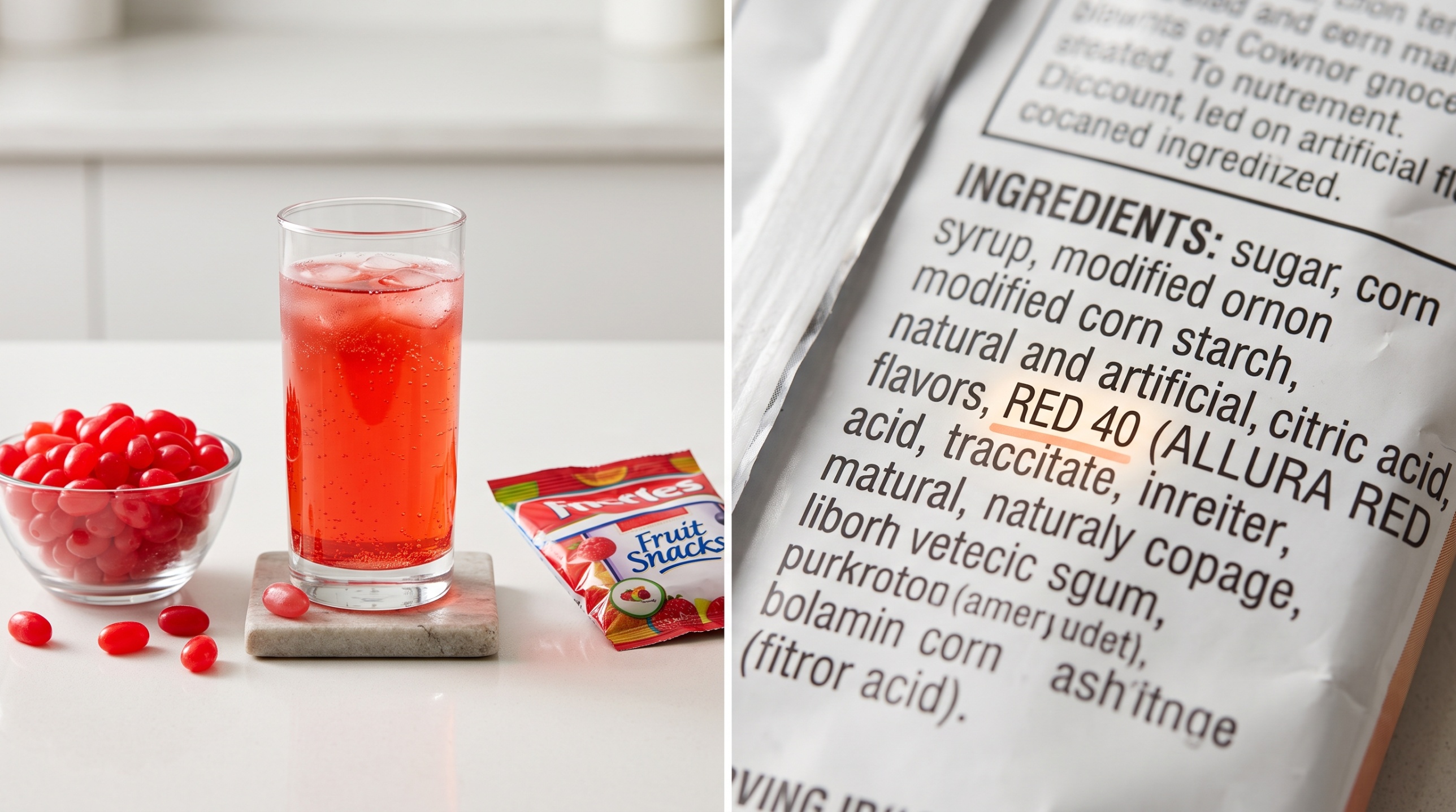

Red candy. Brightly colored drinks. Fruit-flavored snacks. What gives so many packaged foods their vivid red color?
One common ingredient is Red 40, a synthetic food dye that has attracted considerable attention from parents, researchers, and health-conscious consumers.
If you’ve ever turned over a snack package and spotted “Red 40” on the ingredient list, you may have wondered: Is it safe? Should you avoid it? And how can you tell which foods contain it?
Let’s separate established facts from ongoing scientific questions and explore how you can make more informed decisions about food coloring.
1. What Is Red 40?
Red 40, also known as Allura Red AC, is a synthetic color additive used to give foods and certain other products a red color. In the United States, it may appear on ingredient labels under names such as:
Manufacturers use color additives to create or restore color, help products look consistent, and make foods visually appealing. Red 40 is found in a range of products, including some:
Candies and gummies
Fruit-flavored snacks
Soft drinks and drink mixes
Frostings and cake decorations
Cereals and desserts
Foods with bright red, pink, orange, or purple coloring
Not every brightly colored product contains Red 40. Some use other approved color additives, while others use colors derived from natural sources. The ingredient list is the best place to start your investigation.
Related reading: Artificial Food Colors Explained →How Red 40 compares with Yellow 5, Blue 1, and other certified colors.
2. Is Red 40 Safe to Eat?
The answer requires some context. Red 40 is permitted for use in foods in the United States, subject to applicable FDA requirements. However, regulatory approval does not mean every possible question about individual sensitivity or long-term health effects has been settled.
The U.S. Food and Drug Administration evaluates color additives for their intended uses and establishes conditions for their use. Red 40 has been approved for use in food under FDA regulations, and the FDA’s broader oversight of color additives includes specifications and requirements intended to help ensure that permitted additives meet applicable safety standards.
International regulatory authorities have also evaluated Allura Red AC, although permitted uses and regulatory approaches can differ among countries.
It’s important to distinguish between three separate questions:
Is a food dye permitted for use by a regulatory authority?
Does scientific evidence indicate a particular health risk?
Might an individual experience a sensitivity or other adverse effect?
These questions are related, but they aren’t interchangeable.
Related reading: Understanding E Numbers →In Europe, Allura Red AC is labeled as E129 — learn how the E-number system works.
3. What Does Research Say About Red 40?
Researchers have investigated synthetic food colors for several reasons, including possible behavioral effects in children, individual sensitivities, and other potential health outcomes. Here’s what consumers should know.
Does Red 40 Cause Hyperactivity in Children?
This is one of the most frequently discussed questions about synthetic food colors. Some research has investigated whether certain artificial food colors may affect activity levels, attention, or behavior in some children.
A frequently cited study, published in The Lancet in 2007, examined mixtures of artificial food colors and sodium benzoate in children. The researchers observed increases in hyperactive behavior measures in some groups.
Some children may be more sensitive to certain food additives than others. Families who suspect a connection between a particular food and changes in behavior can discuss their observations with a qualified healthcare professional.
Can Red 40 Cause Allergic Reactions?
Reactions to food additives are possible, but reported symptoms and their causes vary. Some people report sensitivity-like symptoms after consuming certain foods containing color additives. Establishing whether a specific additive is responsible can be difficult because packaged foods contain multiple ingredients.
A suspected reaction to Red 40 should not automatically be treated as a confirmed allergy. If you experience recurring symptoms after eating a particular food, a healthcare professional can help evaluate possible causes and determine whether further assessment is appropriate.
Is Red 40 Linked to Cancer?
Questions about cancer and synthetic food dyes frequently circulate online, sometimes without sufficient scientific context. It is important to distinguish between findings from laboratory experiments, studies involving animals, human epidemiological research, and conclusions reached by regulatory authorities.
Red 40 has undergone safety evaluations for its permitted uses. The fact that a substance is synthetic does not, by itself, establish that it causes cancer. Likewise, one laboratory finding or isolated study should not be interpreted as proof of a health effect in humans.
When evaluating claims about cancer, look for:
- The specific study
- The amount and conditions of exposure
- Whether the findings have been replicated
- How the evidence fits with broader scientific assessments
Avoid treating sensational social media claims as a substitute for a review of the evidence.
4. Why Is Red 40 Controversial?
Several factors contribute to ongoing public interest in Red 40:
It is synthetic.
Some consumers prefer foods colored with ingredients derived from plants or other natural sources.
It is common in certain highly processed foods.
Brightly colored candies, sweetened beverages, and desserts may also contain considerable added sugar or other ingredients consumers want to limit.
Research continues to attract attention.
Some studies suggest certain food-color mixtures may influence behavior in some children, but the findings do not establish a universal response or a specific effect from Red 40 alone.
Regulatory decisions can differ.
Different authorities may evaluate evidence, exposure, and acceptable uses under different regulatory frameworks.
However, controversy alone does not establish that an ingredient is harmful. A more useful approach is to examine the evidence, understand your own preferences, and consider the overall nutritional quality of the foods you eat.
5. How Can You Identify Red 40 in Your Food?
You don’t need to memorize every food dye to become a more informed shopper. Start with these simple steps.
- 1
Step 1: Turn the Package Around
Don’t rely only on the product name, packaging color, or front-of-package claims. Look at the ingredient list, where Red 40 may be identified by its common name or regulatory designation.
- 2
Step 2: Check Foods You Buy Frequently
Pay particular attention to products that use vivid colors, such as brightly colored candies, fruit-flavored drinks, frostings and cake decorations, colorful breakfast cereals, and certain packaged snacks. These are categories to investigate, not a guarantee that every product contains Red 40.
- 3
Step 3: Look for Other Color Additives
Red 40 isn’t the only color additive used in food. You may encounter other synthetic colors or color ingredients derived from vegetables, fruits, or spices. Check each product’s ingredient list rather than assuming one color source is always used.
- 4
Step 4: Evaluate the Whole Product
Color additives are only one part of a food’s ingredient profile. Consider added sugars, sodium, fiber, and other nutritional characteristics. A food without Red 40 isn’t automatically more nutritious, and a product with an approved color additive isn’t automatically nutritionally poor.
The right choice depends on the complete product and your priorities.
Related reading: How to Read a Food Label in 60 Seconds →A quick routine for checking ingredients, added sugars, and serving sizes together.
6. Should You Avoid Red 40?
There isn’t one answer that fits every household. Some consumers choose to avoid Red 40 because they prefer foods without synthetic colors. Others focus on overall nutrition and consume products containing permitted color additives. Families may also make different choices depending on their children’s preferences, individual sensitivities, or advice from healthcare professionals.
If your goal is to reduce exposure to Red 40, you can:
- Read ingredient labels before buying packaged foods.
- Compare similar products and select options without Red 40 when available.
- Choose less heavily colored foods when that fits your preferences.
- Check ingredients again when switching brands or product varieties.
- Discuss suspected food-related symptoms with a qualified healthcare professional.
You don’t need to panic when you encounter an unfamiliar ingredient. Instead, use reliable information to decide what belongs in your shopping cart.
How IntelliEats Helps You Spot Red 40
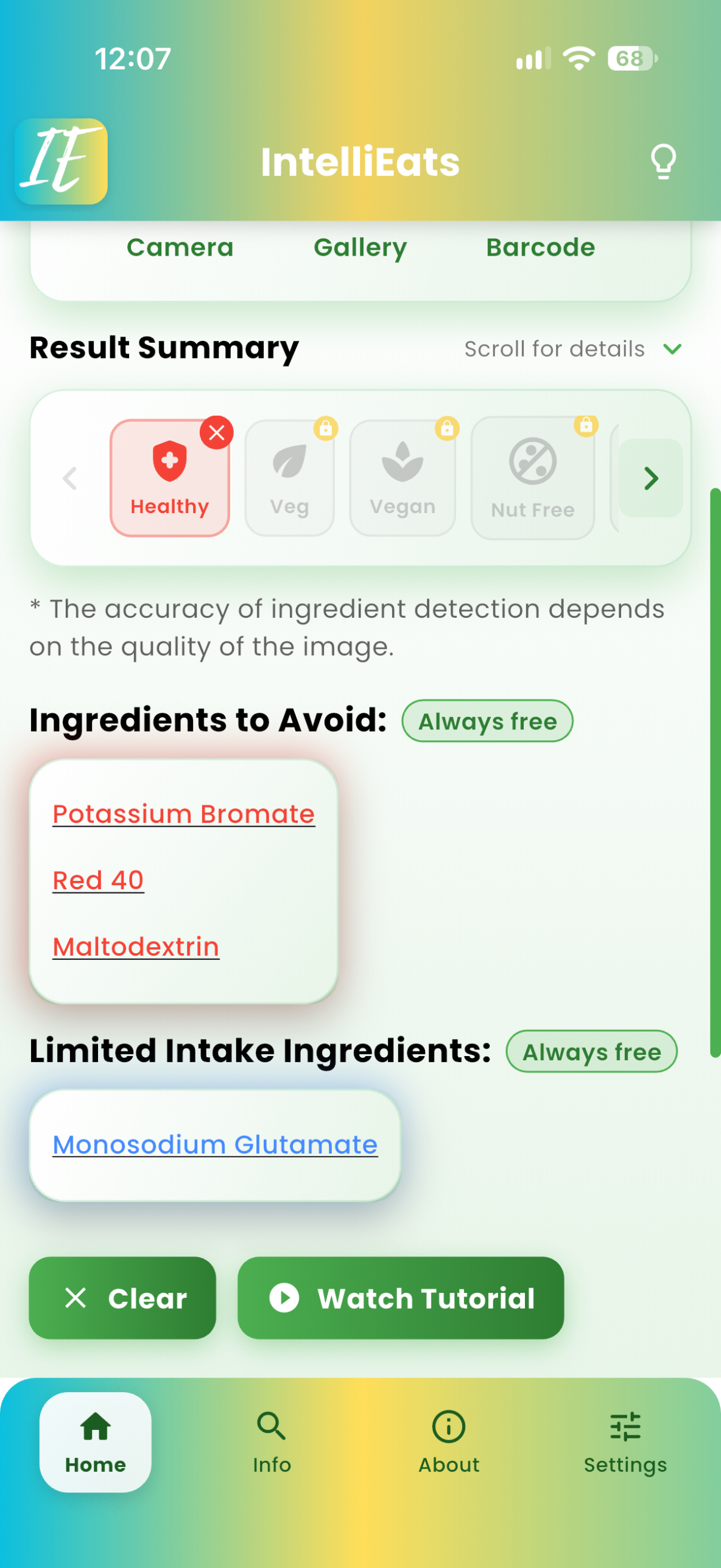
Reading every ingredient label can be frustrating, particularly when you’re shopping for children or comparing several similar products. IntelliEats helps make ingredient investigation easier by letting you scan packaged-food ingredient labels and review the ingredients identified.
Find Red 40 on ingredient labels. Instead of searching manually every time, use the scanner to examine a product’s ingredient list. The app can help you identify listed ingredients, including Red 40 when the label is captured and recognized correctly.
Understand what you’re looking at. Seeing “FD&C Red No. 40” may not immediately tell you what the ingredient is. IntelliEats makes ingredient information easier to understand — and identifying an ingredient is different from determining that it is harmful.
Evaluate products according to your preferences. Compare two fruit-flavored snacks — one listing Red 40 and another using a different coloring ingredient — then review both complete ingredient lists and Nutrition Facts labels before deciding.
The goal is not to label every ingredient as good or bad. A quick scan can help you investigate. Your informed decision is what matters.
7. The Bottom Line: Understand the Ingredient Before You Decide
Red 40 is a synthetic food color additive permitted for specified uses in the United States.
Scientific research has examined potential effects of synthetic food colors, including possible behavioral effects in some children. However, findings involving mixtures of additives should not be interpreted as proof that Red 40 alone causes a particular condition. Individual preferences and sensitivities can also influence food choices.
If you prefer to avoid Red 40, reading ingredient labels and comparing products are practical ways to identify alternatives. And if you’re unsure what a food label means, you don’t have to investigate every unfamiliar ingredient on your own.
The next time a brightly colored snack catches your eye, turn the package around, check the ingredients, and make an informed choice.
Explore IntelliEats and take the guesswork out of understanding your food labels.
Related IntelliEats Articles
Continue learning about food ingredients:
References and Further Reading
- U.S. Food and Drug Administration — Color Additives Questions and Answers for Consumers — official information about color additives and their regulation.
- European Food Safety Authority — Food Additives — scientific evaluations of food additives, including Allura Red AC (E129).
- McCann D, Barrett A, Cooper A, et al. Food additives and hyperactive behaviour in 3-year-old and 8/9-year-old children in the community: a randomised, double-blinded, placebo-controlled trial. The Lancet. 2007;370(9598):1560–1567. — this trial tested mixtures of several artificial food colors combined with the preservative sodium benzoate; it did not test Red 40 on its own.
Last reviewed: October 2026
Disclaimer: This article is for general educational purposes only and does not replace advice from a physician, registered dietitian, allergist, or other qualified healthcare professional.
Research & Regulatory Further Reading
The sources below provide background on food labeling, regulation, and research relevant to this topic. They do not establish that any individual ingredient is harmful at typical food exposure levels.
Medical Disclaimer
The information in this article is provided for educational purposes only and is not intended as medical, nutritional, or dietary advice. Ingredients approved by regulatory authorities are considered safe when used within established limits. Always consult a qualified healthcare professional or registered dietitian for guidance tailored to your personal health needs. See our Editorial Policy to learn how we research and review our content.