Natural Flavor vs. Artificial Flavor: What’s the Difference? A Complete Guide
Have you ever looked at the ingredient list on your favorite snack and noticed the words “Natural Flavor” or “Artificial Flavor”?
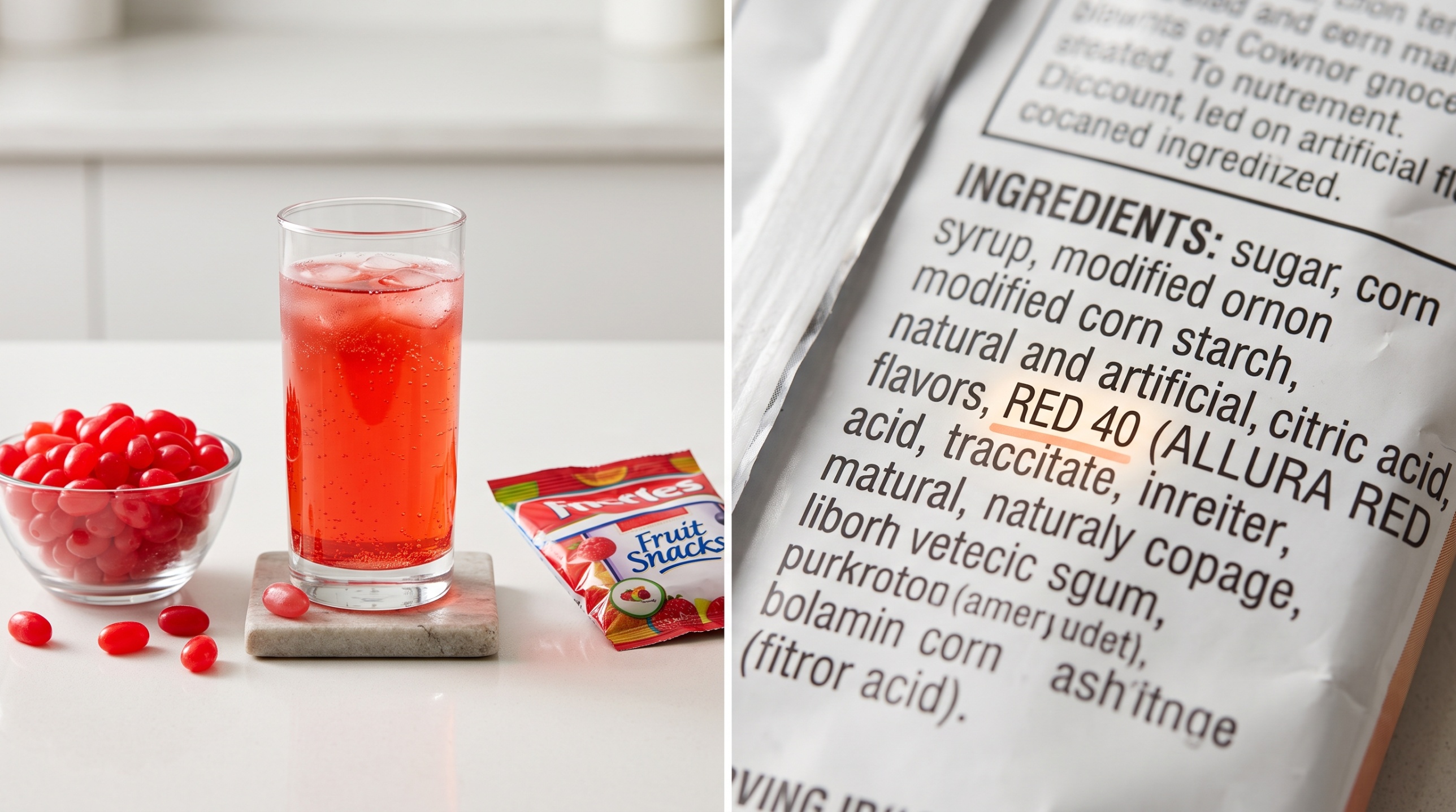
These ingredients appear in thousands of everyday foods, including cereals, yogurt, chips, protein bars, flavored water, candy, and beverages. Despite being so common, they are also among the most misunderstood ingredients on food labels.
Many people assume that natural flavors are always healthier and artificial flavors are harmful chemicals. In reality, the answer is much more nuanced.
In this guide, we’ll explain:
- What natural flavors are
- What artificial flavors are
- How they’re made
- Why food manufacturers use them
- Whether they’re safe
- How to read ingredient labels with confidence
By the end of this article, you’ll understand why the terms “natural” and “artificial” don’t always tell the whole story.
What Is a Flavor?
Before comparing natural and artificial flavors, it’s helpful to understand what a flavor actually is.
When you eat food, your brain combines information from:
- Taste (sweet, salty, sour, bitter, umami)
- Aroma (what you smell)
- Texture
- Temperature
Most of what we recognize as “flavor” actually comes from aroma compounds detected by our sense of smell.
Food scientists use flavor ingredients to recreate or enhance these aromas.
For example, the characteristic smell of a strawberry comes from a combination of dozens of naturally occurring aroma compounds—not just one.
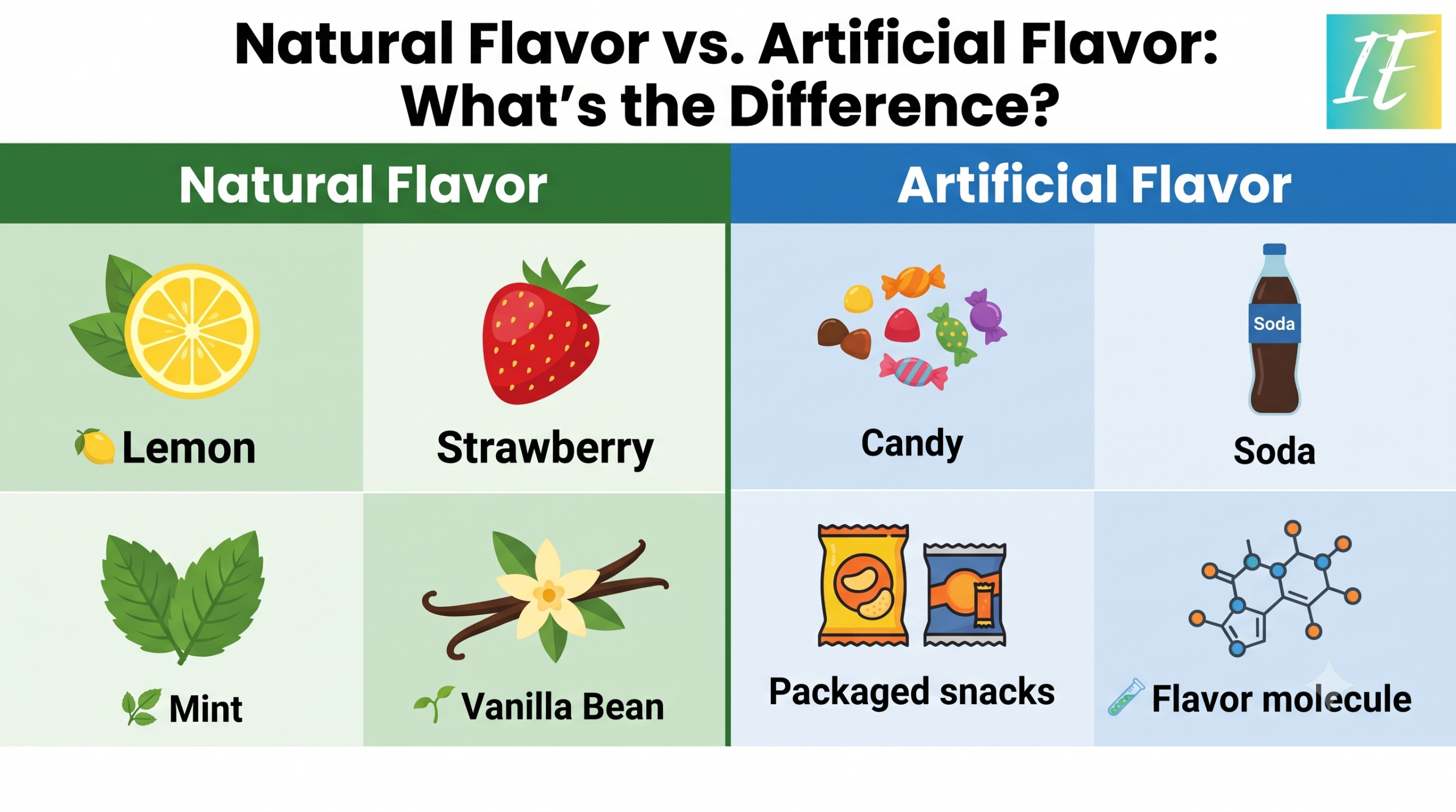
What Is Natural Flavor?
According to the U.S. Food and Drug Administration (FDA), a natural flavor is derived from plant or animal sources.
These sources may include:
Fruits
Vegetables
Herbs
Spices
Meat
Seafood
Poultry
Dairy products
Fermentation products
The flavoring compounds are extracted, distilled, fermented, roasted, or otherwise processed before being added to food.
Examples
Natural vanilla flavor may come from:
Vanilla beans
Natural lemon flavor may come from:
Lemon peel
Natural mint flavor may come from:
Peppermint leaves
Natural orange flavor may come from:
Orange oil
The key point is that the source of the flavor is natural, even though processing is often required to isolate the desired flavor compounds.
What Is Artificial Flavor?
Artificial flavors are flavoring substances that are not derived directly from natural plant or animal sources.
Instead, they are created through chemical synthesis or other manufacturing processes to produce the same flavor molecules found in nature—or sometimes entirely new flavor profiles.
For example:
- A strawberry-flavored candy rarely contains actual strawberries.
- Instead, food scientists combine specific flavor compounds to create the familiar strawberry taste.
Interestingly, the chemical structure of an artificial flavor molecule may be identical to the one found naturally in fruit.
Natural Flavor vs. Artificial Flavor: Quick Comparison
| Feature | Natural Flavor | Artificial Flavor |
|---|---|---|
| Source | Plant or animal materials | Created through synthesis |
| Purpose | Add or enhance flavor | Add or enhance flavor |
| Taste | Often very similar | Often very similar |
| FDA Regulation | Yes | Yes |
| Safety Evaluation | Yes | Yes |
| Nutritional Value | Minimal | Minimal |
One important takeaway is that both types of flavors are used in very small amounts and contribute little to a food’s nutritional value.
Why Do Food Companies Use Flavors?
Many foods lose some of their natural aroma during processing, freezing, drying, or cooking.
Flavorings help:
- Restore lost flavor
- Maintain consistency between batches
- Improve taste
- Create recognizable products
- Extend product appeal
For example, a strawberry yogurt may contain real strawberries, but manufacturers may also add natural strawberry flavor to ensure every container tastes consistent throughout the year.
Common Foods That Contain Natural or Artificial Flavors
You may find these ingredients in:
Breakfast cereals
Granola bars
Yogurt
Ice cream
Chips
Crackers
Candy
Chocolate
Flavored sparkling water
Sports drinks
Protein powders
Meal replacement shakes
Frozen meals
Instant oatmeal
Snack bars
Seeing “natural flavor” or “artificial flavor” on a label does not automatically indicate whether the product is healthy or unhealthy.
Does “Natural” Mean Healthier?
Not necessarily.
This is one of the biggest misconceptions about food labels.
Consider these examples:
Product A
Organic fruit yogurt
Contains:
- Natural flavor
- Fruit
- Protein
- Calcium
Product B
Sugary fruit candy
Contains:
- Natural flavor
- Large amounts of added sugar
- Artificial colors
Although both products contain natural flavor, their overall nutritional quality is very different.
The word “natural” describes the source of the flavoring, not the overall healthfulness of the food.
Can Natural Flavors Still Be Highly Processed?
Yes.
Natural flavors often undergo several processing steps before being added to food.
These may include:
Distillation
Fermentation
Extraction
Heating
Concentration
Blending
This doesn’t mean they’re unsafe—it simply means that “natural” does not necessarily mean “minimally processed.”
Can Artificial Flavors Be Chemically Identical?
Surprisingly, yes.
One of the most interesting facts about food science is that a flavor molecule produced in a laboratory can be chemically identical to the same molecule found in nature.
For example, the compound vanillin provides vanilla flavor.
Vanillin can come from:
- Vanilla beans (natural source)
- Laboratory synthesis (artificial source)
Once purified, the molecules themselves can be chemically indistinguishable. The primary difference lies in how they were obtained, not necessarily in the final molecular structure.
Myths vs. Facts
| Myth | Fact |
|---|---|
| Natural flavors are always healthier. | The source of a flavor doesn’t determine the nutritional quality of a food. |
| Artificial flavors are automatically dangerous. | Approved artificial flavors are evaluated for safety before use. |
| Natural flavors mean the food contains lots of real fruit. | Not necessarily. A product may contain natural flavor but very little fruit. |
| Artificial flavors have nutritional value. | Flavorings are used in tiny amounts and contribute little nutrition. |
Key Takeaways
- Natural flavors come from plant or animal sources.
- Artificial flavors are created through synthesis to produce specific flavor compounds.
- Both are used to improve or restore flavor.
- Neither natural nor artificial flavors significantly affect a food’s nutritional value.
- The overall nutritional quality of a product matters more than whether it contains natural or artificial flavor.
Are Natural Flavors Safe?
One of the most common questions people ask is:
“If a flavor is natural, does that mean it is automatically safe?”
The answer is more complicated than simply saying yes or no.
Natural flavors are reviewed and regulated by food safety authorities before they can be used in foods. In the United States, flavor ingredients are regulated by the U.S. Food and Drug Administration (FDA).
Manufacturers must ensure that flavor ingredients are safe for their intended use and used in appropriate amounts.
However, the word “natural” does not mean:
- More nutritious
- More beneficial
- Completely free from processing
- Suitable for every individual
For example, a natural flavor derived from a plant may still not be appropriate for someone with a specific allergy or sensitivity.
Are Artificial Flavors Safe?
Artificial flavors often receive more attention because the word “artificial” sounds concerning.
However, artificial does not automatically mean harmful.
Before artificial flavors are used in foods, they undergo safety evaluations. Regulatory agencies consider:
- Toxicology data
- Expected consumption levels
- How the ingredient is used
- Potential risks at different exposure levels
Artificial flavors are typically used in very small amounts, often measured in parts per million.
The presence of an artificial flavor on a label does not by itself indicate that a food is unhealthy.
Why Don’t Companies List the Exact Flavor Ingredients?
Many consumers wonder:
“Why does the label only say natural flavor instead of listing every ingredient?”
Flavor formulas are often considered proprietary information because they represent a company’s unique recipe.
For example, a beverage company may use a specific combination of flavor compounds to create its signature taste.
Food labeling laws allow companies to group certain flavor ingredients under terms such as:
- Natural flavor
- Artificial flavor
instead of listing every individual compound.
However, manufacturers must still follow regulations regarding allergens and safety.
Natural Flavor and Allergies
Although uncommon, some people may have concerns about natural flavors because they can come from different sources.
A natural flavor may originate from:
Fruits
Spices
Plants
Dairy
Eggs
Seafood
Meat
If a flavor ingredient contains a major allergen, manufacturers must follow applicable allergen labeling requirements.
People with severe food allergies should:
- Read labels carefully
- Look for allergen statements
- Contact manufacturers if unsure
Are Natural Flavors Vegan?
Not always.
Because natural flavors can come from both plant and animal sources, vegans may want to verify the source.
Examples:
| Ingredient Source | Vegan? |
|---|---|
| Natural vanilla flavor from vanilla beans | Usually yes |
| Natural citrus flavor from orange peel | Usually yes |
| Natural dairy flavor | No |
| Natural meat flavor | No |
Some companies voluntarily label products as:
- Vegan
- Plant-based
- Vegetarian
when applicable.
Are Artificial Flavors Vegan?
Many artificial flavors are vegan because they are produced through chemical synthesis rather than animal sources.
However, the complete manufacturing process may vary.
If following a strict vegan diet, checking with the manufacturer is the safest approach.
Natural Flavors, Artificial Flavors, and Pregnancy
Many pregnant women become more careful about food labels and ingredients.
Current evidence does not suggest that approved natural or artificial flavors, when consumed within normal dietary patterns, pose a risk for most pregnancies.
However, pregnancy nutrition is about the overall quality of the diet.
Instead of focusing only on flavor ingredients, consider:
- Added sugar
- Protein content
- Fiber
- Vitamins and minerals
- Overall processing level
During Pregnancy, It May Be Helpful To:
- Choose nutrient-rich foods more often
- Limit highly processed foods
- Read ingredient labels
- Discuss supplements and special dietary concerns with your healthcare provider
Do Children Need to Avoid Natural or Artificial Flavors?
Parents often ask whether flavors should be avoided in children’s foods.
The answer depends on the overall food.
For example:
Example 1
A yogurt containing:
- Milk
- Fruit
- Natural flavor
may still provide:
- Calcium
- Protein
- Important nutrients
Example 2
A candy containing:
- Sugar
- Artificial flavor
- Artificial colors
may provide little nutritional value.
The bigger concern is usually the overall pattern of eating—not one flavor ingredient.
How Food Companies Create Flavors
Creating a flavor is a complex science.
Food scientists may analyze:
- Aroma compounds
- Taste receptors
- Consumer preferences
- Stability during storage
- How flavors interact with other ingredients
For example, strawberry flavor may involve dozens of individual aroma compounds.
A food scientist may combine specific compounds to recreate:
- Fresh strawberry aroma
- Creamy vanilla taste
- Citrus freshness
- Chocolate notes
How to Make Better Choices When Shopping
Instead of asking:
“Does this product contain natural flavor?”
Ask:
“What is the overall quality of this product?”
Use this simple checklist:
Look at the First Ingredients
Ingredients are listed by weight. Look for:
- 🌾 Whole grains
- 🍓 Fruits
- 🥦 Vegetables
- 🥜 Nuts
- 🌻 Seeds
- 🍗 Protein sources
Check Added Sugars
A product with natural flavors but very high added sugar may not be the best everyday choice.
Compare Similar Products
Example:
Yogurt A
- Milk
- Strawberries
- Natural flavor
- Low added sugar
Yogurt B
- Sugar
- Artificial flavor
- Candy pieces
- Few nutrients
The flavor type alone does not determine which product is healthier.
How IntelliEats Helps You Understand Food Labels
Ingredient lists can sometimes feel overwhelming. Terms like natural flavor, artificial flavor, emulsifier, preservative, and stabilizer may not immediately explain their purpose.
Scan any package and IntelliEats identifies whether a flavoring is listed as natural or artificial, explains what that label actually tells you about the source, and shows it alongside added sugar, sodium, and other ingredients so you can judge the whole product—not one word on the list.
- Scan ingredient lists directly from packaging.
- Understand unfamiliar ingredients in plain language.
- Learn why ingredients are used, including flavorings.
- Compare food choices based on personal preferences.
The goal is not to label foods as “good” or “bad,” but to help people make informed decisions.
Frequently Asked Questions
Is natural flavor better than artificial flavor?
Not necessarily. Natural and artificial describe where the flavor comes from, not whether a food is healthier.
Does natural flavor mean real fruit is in the product?
No. A product can contain natural strawberry flavor without containing significant amounts of strawberries. Always check the full ingredient list.
Are artificial flavors chemicals?
Everything we consume is made of chemicals, including natural foods. Artificial flavors are manufactured flavor compounds, many designed to replicate flavors found in nature.
Should I avoid products with natural flavors?
Not necessarily. Consider the entire product, including sugar, fiber, protein, vitamins, and overall ingredients.
Are natural flavors processed?
Yes. Natural flavors often require extraction, purification, concentration, or fermentation before being used.
Why do companies use artificial flavors?
Artificial flavors can provide consistent taste, reduce costs, improve flavor stability, and recreate flavors that are difficult to obtain naturally.
Natural Flavor vs Artificial Flavor: Quick Summary
| Question | Answer |
|---|---|
| Does natural mean healthier? | Not necessarily |
| Does artificial mean unsafe? | No |
| Are both regulated? | Yes |
| Do they provide nutrition? | Very little |
| Are they used in small amounts? | Usually yes |
| Should the whole food be considered? | Yes |
Final Thoughts
Natural and artificial flavors are two of the most misunderstood ingredients on food labels.
The biggest difference is their source:
- Natural flavors come from plant or animal sources.
- Artificial flavors are created through manufacturing processes.
But the source alone does not determine whether a food is healthy.
A balanced approach is to:
- Read ingredient labels
- Understand what ingredients do
- Focus on overall nutrition
- Choose mostly minimally processed foods
- Make choices that fit your family’s needs
Understanding food labels gives you the confidence to make informed decisions instead of relying on marketing claims.
Related IntelliEats Articles
Continue learning about food ingredients:
References
- U.S. Food and Drug Administration (FDA). Food Ingredients and Packaging.
- U.S. Food and Drug Administration (FDA). Flavoring Agents and Related Substances.
- European Food Safety Authority (EFSA). Food Additives and Flavourings.
- Joint FAO/WHO Expert Committee on Food Additives (JECFA). Food Additive Evaluations.
- Centers for Disease Control and Prevention (CDC). Nutrition and Food Safety Resources.
- American College of Obstetricians and Gynecologists (ACOG). Nutrition During Pregnancy.
- World Health Organization (WHO). Healthy Diet Guidance.
Research & Regulatory Further Reading
The sources below provide background on food labeling, regulation, and research relevant to this topic. They do not establish that any individual ingredient is harmful at typical food exposure levels.
Medical Disclaimer
The information in this article is provided for educational purposes only and is not intended as medical, nutritional, or dietary advice. Ingredients approved by regulatory authorities are considered safe when used within established limits. Always consult a qualified healthcare professional or registered dietitian for guidance tailored to your personal health needs. See our Editorial Policy to learn how we research and review our content.