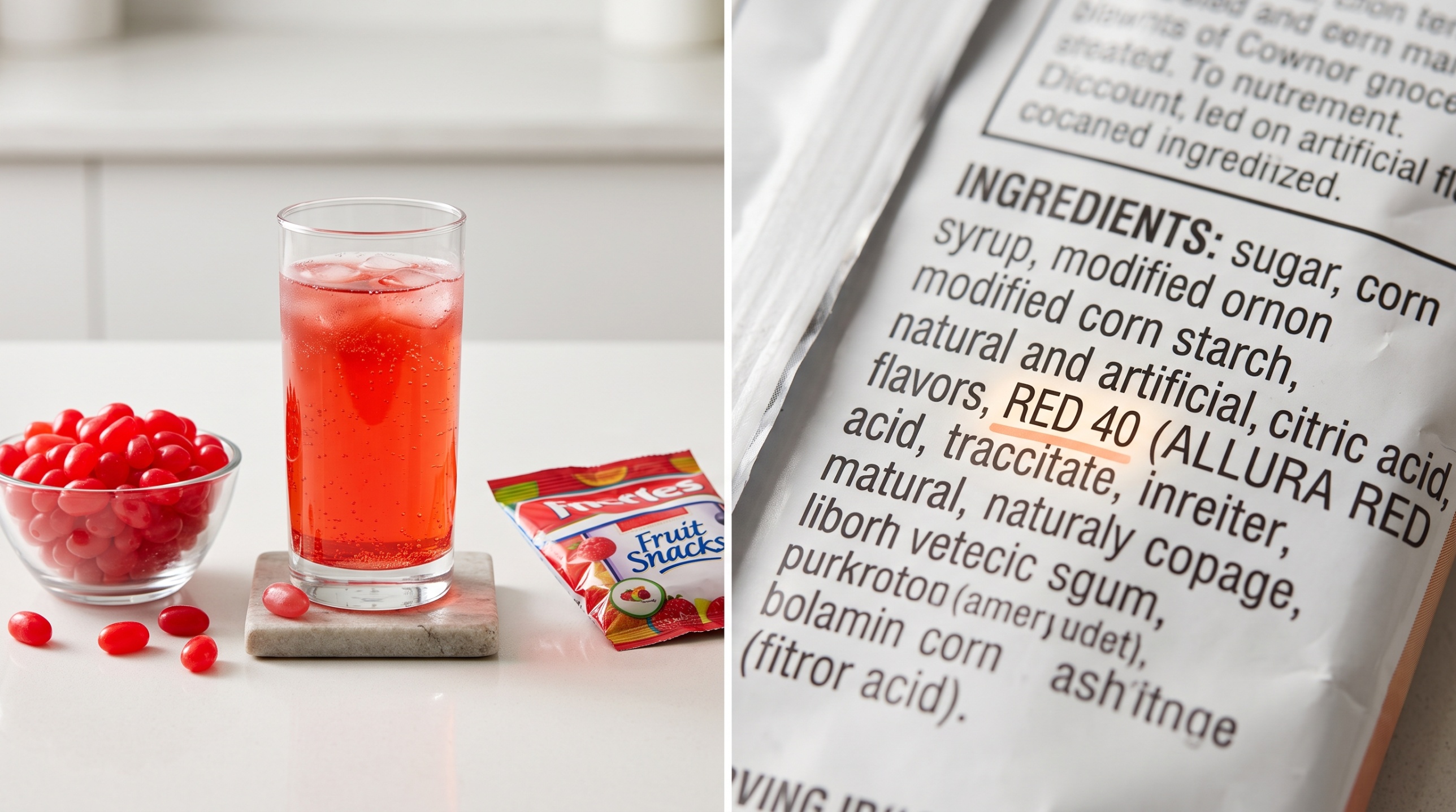
50 Most Common Food Ingredients Explained: What They Are, Why They’re Used, and What to Know
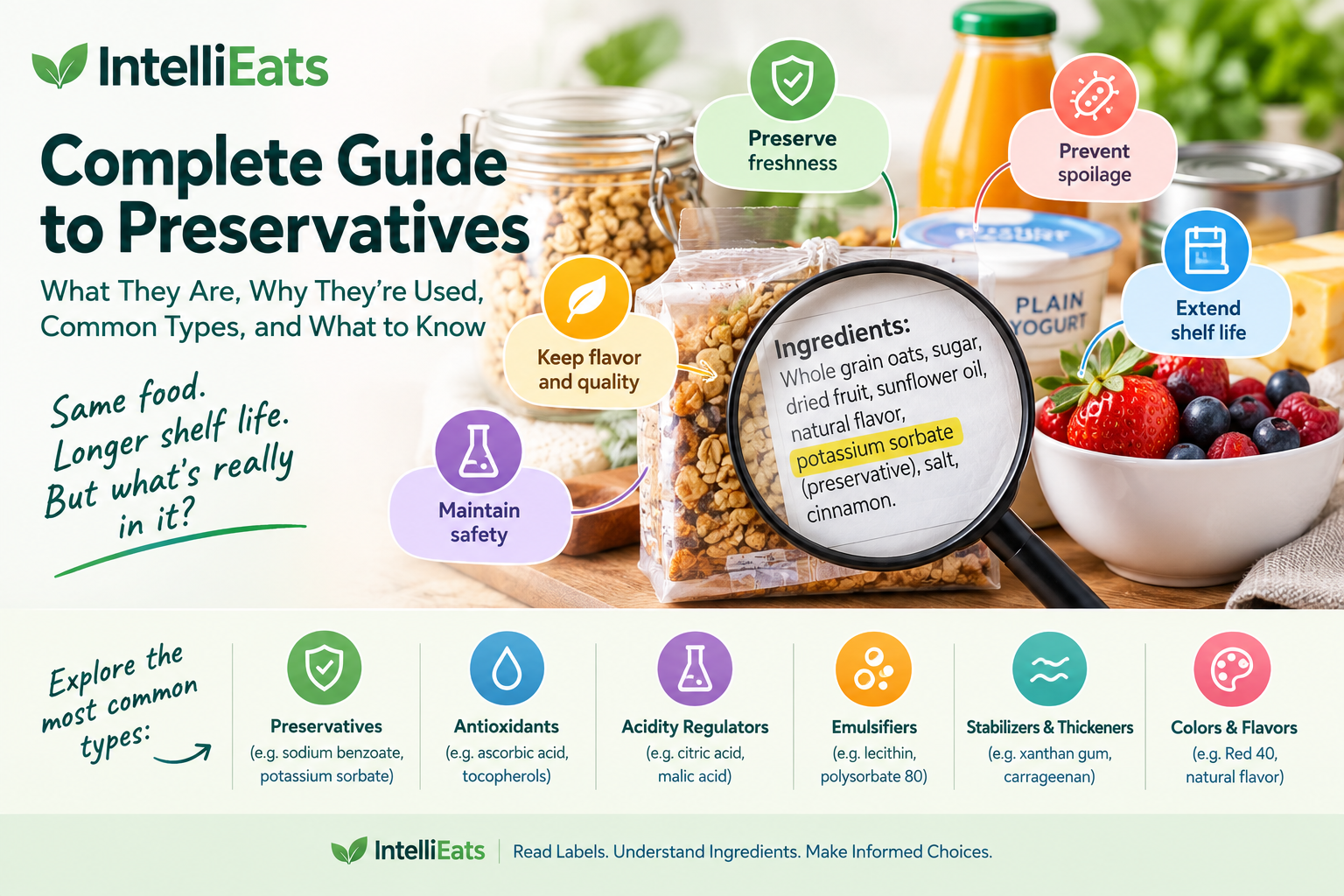
Have you ever turned over a package of cereal, bread, yogurt, snack bars, or frozen food and wondered what all those unfamiliar ingredients actually mean? You are not alone.
Modern packaged foods can contain dozens of ingredients, and many have names that sound complicated. Ingredients such as maltodextrin, xanthan gum, citric acid, lecithin, sodium benzoate, carrageenan, and tocopherols can be difficult to understand simply by reading the label.
But an unfamiliar name doesn’t automatically mean an ingredient is harmful. Food ingredients may help preserve freshness, improve texture, prevent separation, add color, control acidity, enhance flavor, or provide sweetness.
This guide explains 50 common food ingredients, why manufacturers use them, where you may find them, and what consumers should know.
How to Use This Guide
Rather than putting every ingredient into a simple “good” or “bad” category, we organize them according to their common functions.
Preservatives
Help slow spoilage
Acidity regulators
Control acidity and pH
Thickeners & stabilizers
Improve texture and consistency
Emulsifiers
Help ingredients stay mixed
Sweeteners
Add sweetness
Colors
Add or restore color
Flavoring ingredients
Add or enhance flavor
Antioxidants
Help protect food from oxidation
Other common ingredients
Serve various food-processing functions
Maltodextrin
OtherWhat is it? A carbohydrate produced by breaking down starch, commonly from corn, rice, potato, or other starch sources.
Why is it used?
- Adds bulk
- Improves texture
- Helps carry flavors
- Provides carbohydrates
- Helps create a desired consistency
Commonly found in
What to know: Maltodextrin is a highly processed carbohydrate ingredient. People monitoring carbohydrate intake may want to pay attention to how much of it is present in the overall product.
Citric Acid
Acidity regulatorWhat is it? An organic acid naturally found in citrus fruits and widely used as a food ingredient.
Why is it used?
- Adds tartness
- Controls acidity
- Helps preserve food quality
- Supports flavor stability
Commonly found in
What to know: Citric acid is a common acidity regulator. Its presence doesn’t mean that a product contains a large amount of citrus fruit.
Xanthan Gum
ThickenerWhat is it? A polysaccharide produced through fermentation and used as a thickening and stabilizing agent.
Why is it used?
- Thickens foods
- Stabilizes mixtures
- Helps prevent separation
- Improves texture
Commonly found in
What to know: It is particularly useful in gluten-free foods because it can help provide structure and texture.
Lecithin
EmulsifierWhat is it? A mixture of phospholipids commonly derived from soy, sunflower, or eggs.
Why is it used?
- Helps ingredients mix
- Prevents separation
- Improves texture
Commonly found in
What to know: The source matters for people with allergies or specific dietary preferences. Soy-derived lecithin may be relevant to someone with a soy allergy.
Sodium Benzoate
PreservativeWhat is it? The sodium salt of benzoic acid, used as a preservative.
Why is it used?
- Helps inhibit microbial growth
- Extends shelf life
- Protects certain acidic foods and beverages
Commonly found in
What to know: Its use is regulated, and permitted amounts depend on the food and regulatory requirements.
Potassium Sorbate
PreservativeWhat is it? A preservative derived from sorbic acid.
Why is it used?
- Helps inhibit the growth of certain molds, yeasts, and microorganisms
Commonly found in
What to know: It is widely used because it can help maintain food quality and extend shelf life.
Carrageenan
ThickenerWhat is it? A carbohydrate extracted from certain red seaweeds.
Why is it used?
- Thickens foods
- Stabilizes mixtures
- Improves texture
Commonly found in
What to know: Carrageenan is the subject of ongoing scientific and consumer discussion. It is important to distinguish food-grade carrageenan from laboratory research involving different substances or experimental conditions.
Guar Gum
ThickenerWhat is it? A soluble fiber derived from guar beans.
Why is it used?
- Thickening
- Stabilizing
- Improving texture
Commonly found in
What to know: It can absorb water and increase viscosity, which is why only relatively small quantities may be needed.
Pectin
ThickenerWhat is it? A naturally occurring polysaccharide found in fruits.
Why is it used?
- Thickens foods
- Helps form gels
- Improves texture
Commonly found in
What to know: Pectin is also a source of soluble dietary fiber.
Agar-Agar
ThickenerWhat is it? A substance derived from certain types of seaweed.
Why is it used?
- Thickening
- Gelling
- Stabilizing
Commonly found in
What to know: Agar is commonly used as a plant-based alternative to gelatin.
Ascorbic Acid
AntioxidantWhat is it? Ascorbic acid is vitamin C.
Why is it used?
- Antioxidant
- Helps maintain food quality
- Can help prevent oxidation
Commonly found in
What to know: When listed as ascorbic acid, it doesn’t necessarily mean the product is marketed as a vitamin C supplement. It may be present because of its technological function.
Tocopherols
AntioxidantWhat is it? Tocopherols are forms of vitamin E.
Why is it used?
- Function as antioxidants
- Help protect fats and oils from oxidation
Commonly found in
What to know: Vitamin E compounds can serve an important food-preservation function.
Rosemary Extract
AntioxidantWhat is it? Derived from rosemary and may be used as an antioxidant.
Why is it used?
- Helps protect oils and fats from oxidation
- Helps maintain product quality
Commonly found in
Sodium Nitrite
PreservativeWhat is it? A curing agent used in certain processed meat products.
Why is it used?
- Helps control microbial growth
- Contributes to characteristic cured-meat color
- Helps develop flavor
Commonly found in
What to know: Nitrites have an important technological and food-safety role, but processed meat consumption is also an area where overall dietary patterns matter.
Calcium Propionate
PreservativeWhat is it? A preservative commonly used in baked goods.
Why is it used?
- Helps inhibit mold growth
Commonly found in
What to know: It can help extend the shelf life of bread and reduce food waste.
Sodium Bicarbonate
OtherWhat is it? Common name: baking soda.
Why is it used?
- Leavening
- pH control
- Texture
Commonly found in
What to know: This is a familiar household ingredient that can appear on food labels under its chemical name.
Monocalcium Phosphate
OtherWhy is it used?
- Leavening
- Acidity regulation
Commonly found in
What to know: It reacts with other ingredients to help produce carbon dioxide and contribute to rising.
Potassium Chloride
OtherWhat is it? A potassium salt.
Why is it used?
- Mineral source
- Sodium-reduction strategy in some foods
Commonly found in
What to know: It can taste bitter at higher concentrations, so formulations are carefully balanced.
Calcium Carbonate
OtherWhat is it? A calcium-containing mineral compound.
Why is it used?
- Calcium fortification
- Acidity control
- Other processing functions
Commonly found in
Ferric Orthophosphate
OtherWhat is it? An iron-containing compound.
Why is it used?
- May be used to fortify foods with iron
Commonly found in
What to know: Some ingredients that sound highly technical are present because they provide essential nutrients.
Sugar
SweetenerWhat is it? A carbohydrate used to provide sweetness.
Why is it used?
- Sweetness
- Texture
- Browning
- Preservation in some foods
Commonly found in
What to know: Look at the Nutrition Facts panel for Added Sugars, not just the ingredient list.
High-Fructose Corn Syrup
SweetenerWhat is it? A sweetener produced from corn starch in which some glucose is converted to fructose.
Why is it used?
- Sweetness
- Texture
- Consistency
- Food manufacturing convenience
Commonly found in
What to know: Like other added sugars, it contributes calories and should be considered within overall dietary intake.
Dextrose
SweetenerWhat is it? Dextrose is another name for glucose.
Why is it used?
- Sweetness
- Browning
- Fermentation
- Texture
Commonly found in
Fructose
SweetenerWhat is it? A naturally occurring simple sugar. It may occur naturally in fruits or be added to processed foods.
Why is it used?
- Sweetness
- Flavor
- Food formulation
Commonly found in
Maltose
SweetenerWhat is it? A sugar made from two glucose molecules.
Why is it used?
- Sweetness
- Flavor
- Fermentation
Commonly found in
Aspartame
SweetenerWhat is it? A low-calorie sweetener that is much sweeter than sugar.
Why is it used?
- Provides sweetness with very little energy compared with sugar
Commonly found in
What to know: Important: People with phenylketonuria (PKU) need to avoid or restrict aspartame because it contains phenylalanine.
Sucralose
SweetenerWhat is it? A high-intensity sweetener.
Why is it used?
- Provides sweetness with very little contribution to calories at typical use levels
Commonly found in
Acesulfame Potassium
SweetenerWhat is it? Also called Ace-K. A high-intensity sweetener.
Why is it used?
- Provides sweetness
- Often combined with other sweeteners
Commonly found in
Stevia
SweetenerWhat is it? Steviol glycosides are sweet compounds derived from the leaves of the stevia plant.
Why is it used?
- Provides sweetness with little or no calories
Commonly found in
Monk Fruit Extract
SweetenerWhat is it? Contains naturally sweet compounds called mogrosides.
Why is it used?
- Used as a high-intensity sweetener
Commonly found in
Red 40
ColorWhat is it? A synthetic food color used to provide a red or reddish-orange color.
Why is it used?
- Adds color
- Creates consistent appearance
- Helps make products visually appealing
Commonly found in
What to know: Food colors are regulated, but consumers may still choose to monitor them for personal or family reasons.
Yellow 5
ColorWhat is it? Also known as Tartrazine.
Why is it used?
- Provides yellow coloring
Commonly found in
What to know: Some individuals may have sensitivities to specific food colors.
Yellow 6
ColorWhat is it? Also known as Sunset Yellow FCF.
Why is it used?
- Provides yellow-orange coloring
Commonly found in
Blue 1
ColorWhat is it? Also known as Brilliant Blue FCF.
Why is it used?
- Creates blue or green colors when combined with yellow coloring
Commonly found in
Caramel Color
ColorWhat is it? Produced by controlled heating of carbohydrates.
Why is it used?
- Adds brown color
- Provides consistent appearance
Commonly found in
What to know: “Caramel color” is a broad category of coloring substances, not simply the same thing as caramel candy.
Natural Flavor
FlavoringWhat is it? Flavoring substances derived from qualifying natural sources.
Why is it used?
- Adds flavor
- Restores flavor lost during processing
- Creates consistent taste
Commonly found in
What to know: “Natural” describes the source of the flavoring, not whether the overall food is nutritious.
Artificial Flavor
FlavoringWhat is it? Flavoring substances that do not qualify as natural flavor under applicable regulations.
Why is it used?
- Adds flavor
- Improves consistency
- Recreates specific flavor profiles
Commonly found in
What to know: Artificial does not automatically mean unsafe. Safety depends on the specific substance, amount, and conditions of use.
Monosodium Glutamate (MSG)
Flavor enhancerWhat is it? The sodium salt of glutamic acid, used as a flavor enhancer.
Why is it used?
- Enhances the savory or umami character of foods
Commonly found in
What to know: MSG is one of the most widely discussed flavor enhancers. Individual responses may vary, but scientific and regulatory assessments should be considered rather than general claims.
Disodium Inosinate
Flavor enhancerWhat is it? A flavor enhancer often used alongside glutamates.
Why is it used?
- Can enhance savory flavor
Commonly found in
Disodium Guanylate
Flavor enhancerWhat is it? Another flavor enhancer.
Why is it used?
- Contributes to savory flavor
- Frequently used in combination with other flavor enhancers
Commonly found in
Sodium Citrate
Acidity regulatorWhat is it? A sodium salt of citric acid.
Why is it used?
- Controls acidity
- Acts as a buffering agent
- Helps manage texture in some foods
Commonly found in
Lactic Acid
Acidity regulatorWhat is it? An organic acid that can be produced naturally during fermentation.
Why is it used?
- Controls acidity
- Provides tartness
- Supports food preservation
Commonly found in
Malic Acid
Acidity regulatorWhat is it? An organic acid naturally found in many fruits.
Why is it used?
- Adds tartness
- Controls acidity
- Enhances flavor
Commonly found in
Modified Food Starch
ThickenerWhat is it? Starch that has been physically, enzymatically, or chemically modified to give it specific properties.
Why is it used?
- Thickening
- Stabilization
- Texture
- Moisture management
Commonly found in
What to know: “Modified” does not mean genetically modified. The term refers to how the starch has been processed to change its functional properties.
Sodium Phosphate
OtherWhat is it? Several sodium salts of phosphoric acid.
Why is it used?
- Texture
- Moisture retention
- Acidity control
- Stabilization
Commonly found in
Silicon Dioxide
OtherWhat is it? A mineral compound used in some foods as an anti-caking agent.
Why is it used?
- Helps prevent powdered ingredients from clumping
Commonly found in
What to know: The name may sound unusual, but silicon dioxide has specific permitted food uses.
Calcium Silicate
OtherWhat is it? A mineral compound.
Why is it used?
- Primarily as an anti-caking agent
Commonly found in
Polysorbate 80
EmulsifierWhat is it? An emulsifier and stabilizer.
Why is it used?
- Helps ingredients stay mixed
- Improves consistency
- Helps stabilize food formulations
Commonly found in
Propylene Glycol
OtherWhat is it? A compound used in certain food applications as a solvent, carrier, humectant, or texture-related ingredient.
Why is it used?
- Helps maintain moisture
- Carries flavors or colors
- Supports food formulation
Commonly found in
What to know: Its permitted use and concentration are regulated.
Gelatin
ThickenerWhat is it? A protein obtained from collagen in animal tissues.
Why is it used?
- Gelling
- Thickening
- Stabilization
- Texture
Commonly found in
What to know: Because conventional gelatin is animal-derived, it is generally not suitable for vegans. People following vegetarian diets should also check the product carefully.
The Most Important Lesson: An Ingredient Is Not the Whole Food
Looking at an ingredient list is useful, but it should not be the only factor you consider. Two products may both contain natural flavors, preservatives, or stabilizers while having completely different nutritional profiles. Consider:
Serving size
Calories
Added sugar
Sodium
Saturated fat
Fiber
Protein
Vitamins and minerals
Ingredient list
Portion size
Your individual dietary needs
Example
Cereal A
- Several functional ingredients
- Substantial fiber
- Relatively little added sugar
Cereal B
- Shorter ingredient list
- Substantial added sugar
- Little fiber
A shorter ingredient list isn’t automatically better.
How to Read Ingredients in Context
Instead of asking
- “Does this product contain an ingredient with a complicated name?”
Ask
- “Why is the ingredient there, how much of the food am I eating, and does this product fit my dietary needs?”
This approach gives you more useful information than simply classifying ingredients as “good” or “bad.”
How IntelliEats Helps You Understand Ingredients
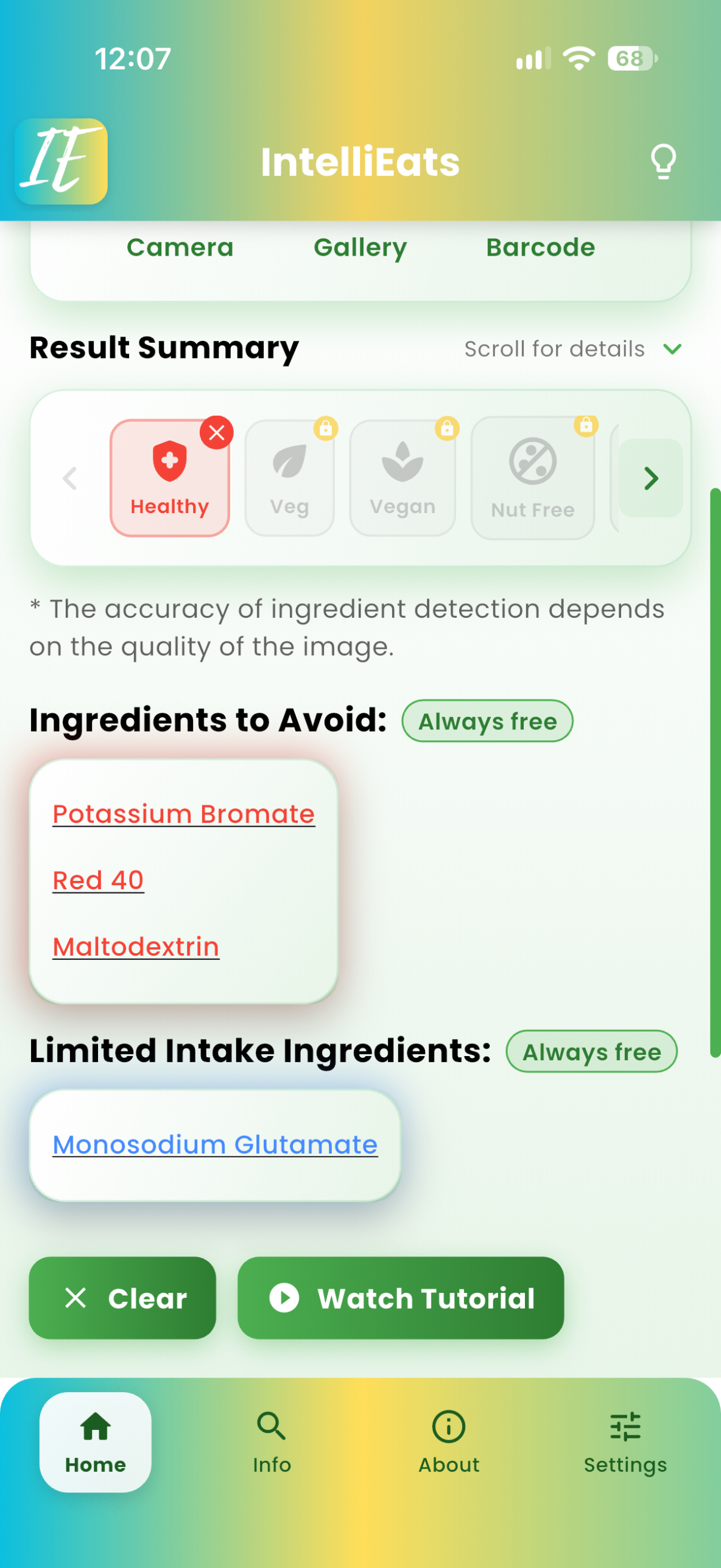
When you’re standing in a grocery store, you may not have time to research every unfamiliar ingredient. IntelliEats is designed to help users scan ingredient labels and quickly identify ingredients they may want to pay attention to.
Instead of manually searching “What is potassium sorbate?” or “Why is xanthan gum in my yogurt?”, scan the ingredient list and let IntelliEats help identify and explain the ingredients.
The app can help users recognize:
- Ingredients to avoid
- Ingredients to limit
- Preservatives
- Colors
- Flavoring ingredients
- Other ingredients that may require additional attention
Dietary preferences supported:
The goal is not to tell users that every ingredient is harmful — it’s to help you identify ingredients, learn about them, and make more informed choices.
How to Use IntelliEats While Grocery Shopping
- 1
Pick a packaged food
Choose a cereal, snack, sauce, yogurt, frozen meal, or another packaged product.
- 2
Find the ingredient list
Turn the package around and locate the ingredients panel.
- 3
Scan the label
Use the IntelliEats scanner to capture the ingredient list.
- 4
Review the results
Look at the ingredients that the app identifies for additional attention.
- 5
Learn
Research unfamiliar ingredients and understand why they are used.
- 6
Decide
Combine the ingredient information with the Nutrition Facts panel and your personal dietary needs.
Remember: Scan → Learn → Compare → Decide
Why Ingredient Education Matters
Food labels aren’t designed to scare consumers — they are a source of information. Once you understand common ingredients, a confusing label becomes much easier to interpret.
“Ascorbic acid”
May simply mean vitamin C.
“Sodium bicarbonate”
Means baking soda.
“Pectin”
A plant-derived gelling and thickening ingredient.
“Tocopherols”
Forms of vitamin E.
Quick Reference: 50 Ingredients at a Glance
| # | Ingredient | Main Function |
|---|---|---|
| 1 | Maltodextrin | Bulking / texture |
| 2 | Citric Acid | Acidity regulator |
| 3 | Xanthan Gum | Thickener / stabilizer |
| 4 | Lecithin | Emulsifier |
| 5 | Sodium Benzoate | Preservative |
| 6 | Potassium Sorbate | Preservative |
| 7 | Carrageenan | Thickener / stabilizer |
| 8 | Guar Gum | Thickener |
| 9 | Pectin | Gelling / thickener |
| 10 | Agar-Agar | Gelling agent |
| 11 | Ascorbic Acid | Antioxidant |
| 12 | Tocopherols | Antioxidant |
| 13 | Rosemary Extract | Antioxidant |
| 14 | Sodium Nitrite | Curing / preservative |
| 15 | Calcium Propionate | Preservative |
| 16 | Sodium Bicarbonate | Leavening |
| 17 | Monocalcium Phosphate | Leavening |
| 18 | Potassium Chloride | Mineral / sodium reduction |
| 19 | Calcium Carbonate | Fortification |
| 20 | Ferric Orthophosphate | Iron fortification |
| 21 | Sugar | Sweetener |
| 22 | High-Fructose Corn Syrup | Sweetener |
| 23 | Dextrose | Sweetener |
| 24 | Fructose | Sweetener |
| 25 | Maltose | Sweetener |
| 26 | Aspartame | High-intensity sweetener |
| 27 | Sucralose | High-intensity sweetener |
| 28 | Acesulfame Potassium | High-intensity sweetener |
| 29 | Stevia | High-intensity sweetener |
| 30 | Monk Fruit Extract | High-intensity sweetener |
| 31 | Red 40 | Food color |
| 32 | Yellow 5 | Food color |
| 33 | Yellow 6 | Food color |
| 34 | Blue 1 | Food color |
| 35 | Caramel Color | Food color |
| 36 | Natural Flavor | Flavoring |
| 37 | Artificial Flavor | Flavoring |
| 38 | Monosodium Glutamate (MSG) | Flavor enhancer |
| 39 | Disodium Inosinate | Flavor enhancer |
| 40 | Disodium Guanylate | Flavor enhancer |
| 41 | Sodium Citrate | Acidity regulator |
| 42 | Lactic Acid | Acidity regulator |
| 43 | Malic Acid | Acidity regulator |
| 44 | Modified Food Starch | Thickener / stabilizer |
| 45 | Sodium Phosphate | Stabilizer / texture |
| 46 | Silicon Dioxide | Anti-caking agent |
| 47 | Calcium Silicate | Anti-caking agent |
| 48 | Polysorbate 80 | Emulsifier / stabilizer |
| 49 | Propylene Glycol | Solvent / humectant |
| 50 | Gelatin | Gelling / texture |
Frequently Asked Questions
Are all food ingredients safe?
No single answer applies to every ingredient. Safety depends on the specific substance, amount, intended use, population, and regulatory standards.
Does a long ingredient list mean a food is unhealthy?
Not necessarily. Some foods require multiple ingredients for flavor, texture, preservation, fortification, or other functions.
Should I avoid ingredients I cannot pronounce?
No. Pronunciation isn’t a measure of safety. Learn what the ingredient is and why it is used.
Are preservatives bad?
Preservatives have specific technological and food-safety functions. The important question is what preservative is present, how much is used, and how the food fits into your overall diet.
Are natural ingredients always better?
No. “Natural” describes a source or characteristic, not the overall nutritional quality of a food.
Are artificial ingredients automatically dangerous?
No. Artificial origin alone does not establish that an ingredient is unsafe.
How can I learn about an ingredient quickly?
Start with the ingredient list and Nutrition Facts panel. Use reliable sources such as regulatory agencies and scientific organizations. Ingredient-scanning tools such as IntelliEats can also help you identify ingredients to research further.
Final Takeaway
Understanding the most common ingredients can make food labels much less intimidating. The next time you see a complicated ingredient name, ask:
- What is it?
- Why is it used?
- How much of it is present?
- What does current evidence say?
- Does it matter for my individual dietary needs?
And when you don’t recognize an ingredient, IntelliEats can help you turn a confusing ingredient list into information you can understand.
Scan. Learn. Compare. Decide.
Related IntelliEats Articles
Continue learning about food ingredients:
References & Further Reading
- U.S. Food and Drug Administration (FDA) — Food Ingredients and Packaging.
- U.S. Food and Drug Administration (FDA) — Food Additives and GRAS Ingredients Information for Consumers.
- U.S. Food and Drug Administration (FDA) — How to Understand and Use the Nutrition Facts Label.
- U.S. Food and Drug Administration (FDA) — Color Additives Questions and Answers for Consumers.
- U.S. Food and Drug Administration (FDA) — Additional Information About High-Intensity Sweeteners.
- U.S. Department of Agriculture (USDA) — Dietary Guidelines for Americans.
- European Food Safety Authority (EFSA) — Food Additives and Flavourings.
- Joint FAO/WHO Expert Committee on Food Additives (JECFA) — Evaluations of Food Additives.
- National Institutes of Health (NIH) — Office of Dietary Supplements.
- Centers for Disease Control and Prevention (CDC) — Nutrition and Healthy Eating Resources.
Last reviewed: September 2026
Disclaimer: This article provides general educational information about food ingredients and food labels. It is not medical or nutritional advice. Individuals with food allergies, medical conditions, pregnancy-related questions, or medically prescribed diets should consult an appropriately qualified healthcare professional.
Research & Regulatory Further Reading
The sources below provide background on food labeling, regulation, and research relevant to this topic. They do not establish that any individual ingredient is harmful at typical food exposure levels.
Medical Disclaimer
The information in this article is provided for educational purposes only and is not intended as medical, nutritional, or dietary advice. Ingredients approved by regulatory authorities are considered safe when used within established limits. Always consult a qualified healthcare professional or registered dietitian for guidance tailored to your personal health needs. See our Editorial Policy to learn how we research and review our content.