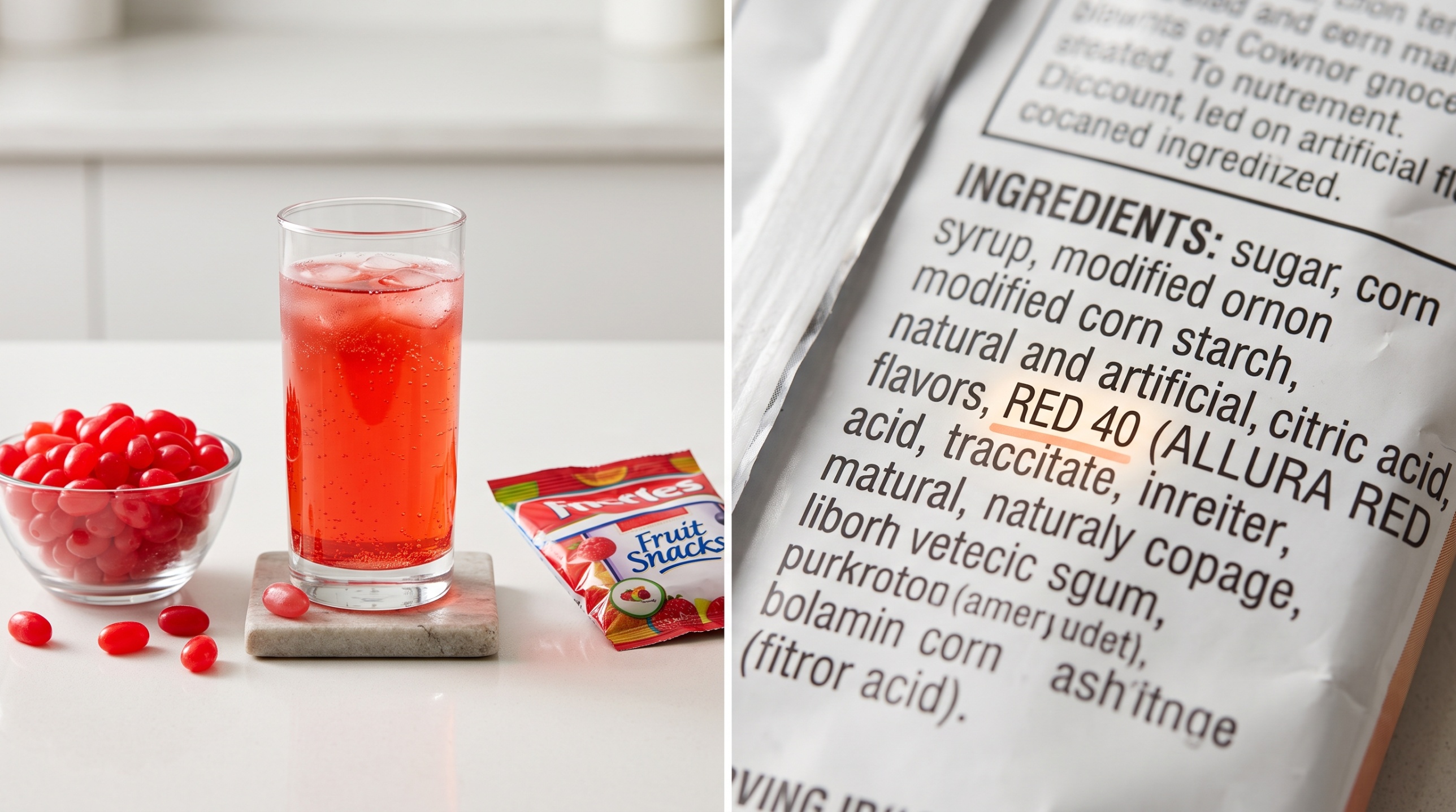
Artificial Food Colors Explained: What They Are, Why They’re Used, and What to Know
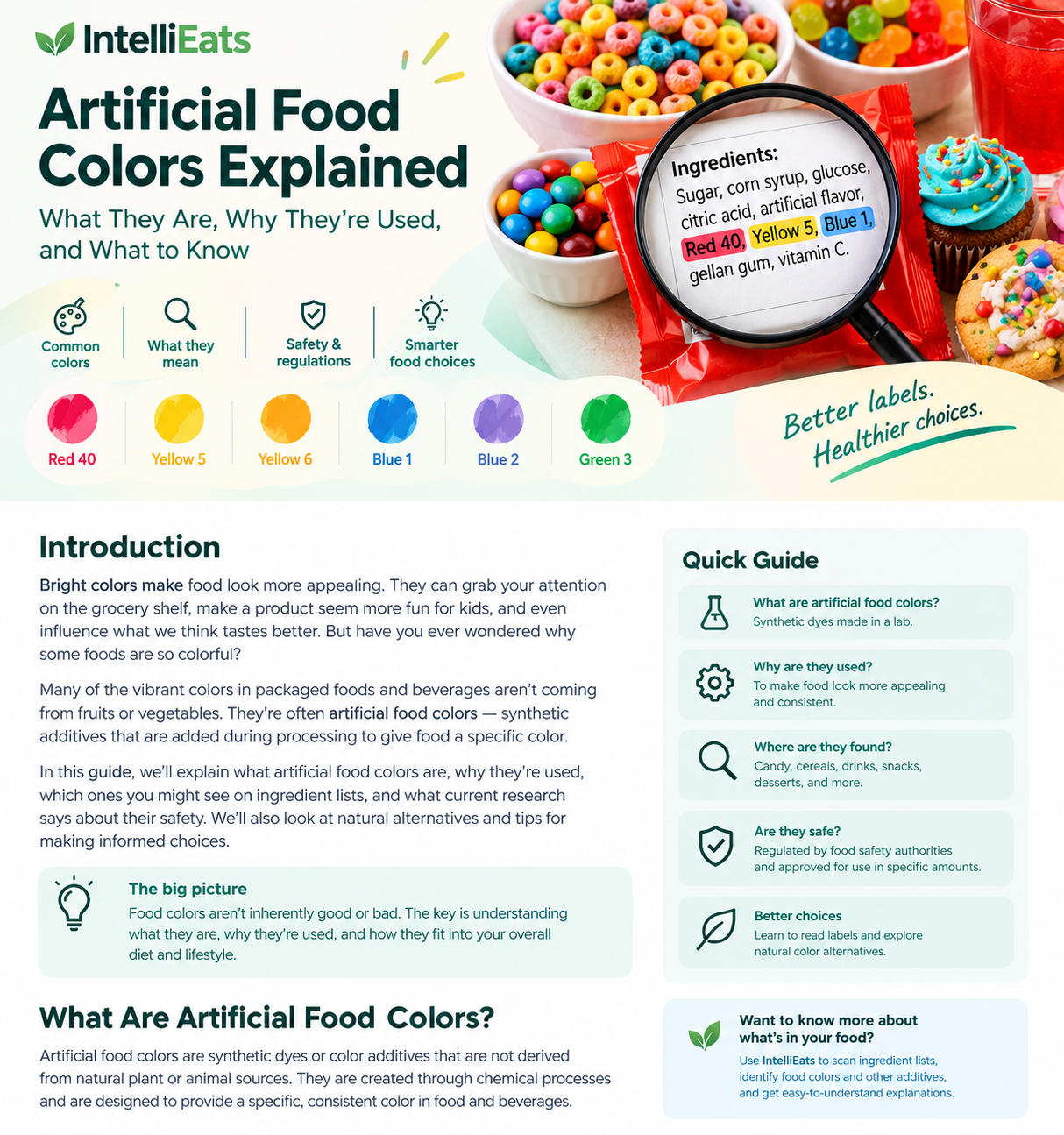
Bright colors can make food more appealing—but what creates those colors?
From brightly colored breakfast cereals and candies to sports drinks, frostings, snacks, and desserts, food colors are everywhere. Some come from ingredients such as beets, turmeric, paprika, or fruit and vegetable extracts. Others are produced synthetically to create a consistent, vibrant appearance.
You may have seen names such as Red 40, Yellow 5, Yellow 6, Blue 1, and Blue 2 on ingredient labels. Are they safe? Why are they used? Are natural colors automatically better? This guide explains the basics in plain language.
What Are Artificial Food Colors?
The U.S. Food and Drug Administration (FDA) describes color additives as dyes, pigments, or other substances capable of imparting color to food or other regulated products. Color additives can be used to:
Replace color lost during processing or storage
Correct natural variation between batches
Enhance an existing color
Give color to foods that would otherwise have little color
Make products visually consistent
Help consumers associate a color with a flavor or product
Artificial does not automatically mean unsafe
“Artificial” and “unsafe” are not synonyms. In the United States, color additives must be approved for their intended uses before they can legally be used in foods, and FDA regulations specify where an approved color can be used. At the same time, regulatory status can change when new evidence, petitions, or policy decisions arise.
Why Do Food Manufacturers Use Artificial Colors?
Consistent appearance
Natural ingredients vary in color depending on variety, growing conditions, processing, and storage. A manufactured color provides a more predictable result.
Bright, recognizable colors
Some synthetic colors produce vivid colors in very small amounts — useful for candies, cereals, beverages, and frostings.
Replacing color lost during processing
Heat, light, oxygen, moisture, and storage can change appearance. Color additives help restore it.
Connecting color with flavor
Red may suggest cherry or strawberry, yellow lemon, orange orange, and blue a berry or blue-raspberry flavor.
Certified vs. Certification-Exempt Colors
The FDA divides permitted food colors into two broad categories:
Certified color additives
- FD&C Red No. 40
- FD&C Yellow No. 5
- FD&C Yellow No. 6
- FD&C Blue No. 1
- FD&C Blue No. 2
- FD&C Green No. 3
- FD&C Red No. 3
Generally synthetic. FDA analyzes representative batch samples to verify identity and purity.
Certification-exempt colors
- Annatto extract
- Beta-carotene
- Beet-derived colors
- Caramel
- Grape skin extract
- Some mineral- or microorganism-derived colors
Do not require FDA batch certification; can include colors from natural sources.
Common Artificial Food Colors to Know
1. Red 40
Also known as: FD&C Red No. 40
Red 40 is a widely used synthetic food color. On a U.S. ingredient label, you may see it listed as “Red 40” or “FD&C Red No. 40.”
May be found in
2. Yellow 5
Also known as: FD&C Yellow No. 5 or tartrazine
Yellow 5 is a synthetic yellow food color used in a variety of foods and beverages.
May be found in
FDA requires foods containing FD&C Yellow No. 5 to identify it by name on the ingredient label.
Some individuals can experience sensitivity reactions to certain substances, including Yellow 5. Anyone who has experienced a suspected reaction should discuss it with a healthcare professional.
3. Yellow 6
Also known as: FD&C Yellow No. 6
Yellow 6 is another synthetic yellow color. Its bright orange-yellow appearance makes it useful where manufacturers want a strong, consistent color.
May be found in
4. Blue 1
Also known as: FD&C Blue No. 1
Blue 1 is a synthetic blue color. Because blue colors can be combined with yellow colors, they are also useful for creating green shades.
May be found in
5. Blue 2
Also known as: FD&C Blue No. 2
Blue 2 is another FDA-approved synthetic color used in certain foods.
May be found in
6. Green 3
Also known as: FD&C Green No. 3
Green 3 is a synthetic green color permitted for certain food uses.
May be found in
What About Red 3?
FD&C Red No. 3 is particularly important because its regulatory status has recently changed.
Products manufactured before the applicable deadline may remain on the market under transition provisions. Red 3 is a good example of why consumers should be careful with statements such as “this ingredient is always safe” or “always dangerous.”
Are Artificial Food Colors Safe?
In the United States, FDA-approved color additives are evaluated for safety under their intended conditions of use. However, “FDA-approved” does not mean every person will respond the same way. Individual sensitivity, allergies, dietary patterns, and total exposure can matter.
Permitted
- “This color is permitted for use under specified conditions.”
Not the same as
- “This color is beneficial to health.”
Approval for use does not mean that a color provides nutritional benefits. The practical question is also how frequently the product is consumed and what the overall food contains.
Artificial Colors and Children’s Foods
Brightly colored products are frequently marketed toward children:
Colorful cereals
Fruit-flavored snacks
Candy
Frosting
Ice pops
Sweetened drinks
Packaged desserts
When evaluating a packaged children’s snack, also look at:
- Added sugars
- Protein
- Fiber
- Sodium
- Whole-food ingredients
- Portion size
- Artificial colors and other additives
- The child’s overall eating pattern
An ingredient list is one part of understanding a food—not the entire nutritional picture.
Natural Food Colors vs. Artificial Colors
Natural color sources can include substances derived from:
Plants
Fruits
Vegetables
Spices
Algae
Microorganisms
Does natural always mean better?
Not necessarily. “Natural” describes the source or regulatory category of an ingredient; it does not by itself assess nutritional quality or safety. Likewise, synthetic does not automatically mean dangerous.
How to Spot Artificial Colors on a Food Label
Look at the ingredient list for names such as:
You may also see the formal format: FD&C Red No. 40, FD&C Yellow No. 5, FD&C Yellow No. 6, FD&C Blue No. 1.
A quick label-reading trick
Find the ingredient list.
Scan for color names and numbers.
Check whether it contains colors you personally want to limit.
Compare the ingredient list with another product.
What Does “Artificial Color” on a Label Mean?
Some certification-exempt colors may be declared as “artificial color” or “artificial coloring” under U.S. labeling rules, while certified colors generally appear by their listed names. So searching for the word “artificial” may not tell you everything — the actual ingredient name is more informative.
Why Are Food Colors Being Discussed More in 2026?
The FDA announced in 2025 a broader effort to encourage the industry to move away from petroleum-based synthetic dyes. In February 2026, it announced additional steps concerning “no artificial colors” claims and alternative food colors, and has been working with industry on reducing Red 40, Yellow 5, Yellow 6, Blue 1, Blue 2, and Green 3.
Companies may reformulate at different times, so rely on the ingredient list of the product you are actually buying.
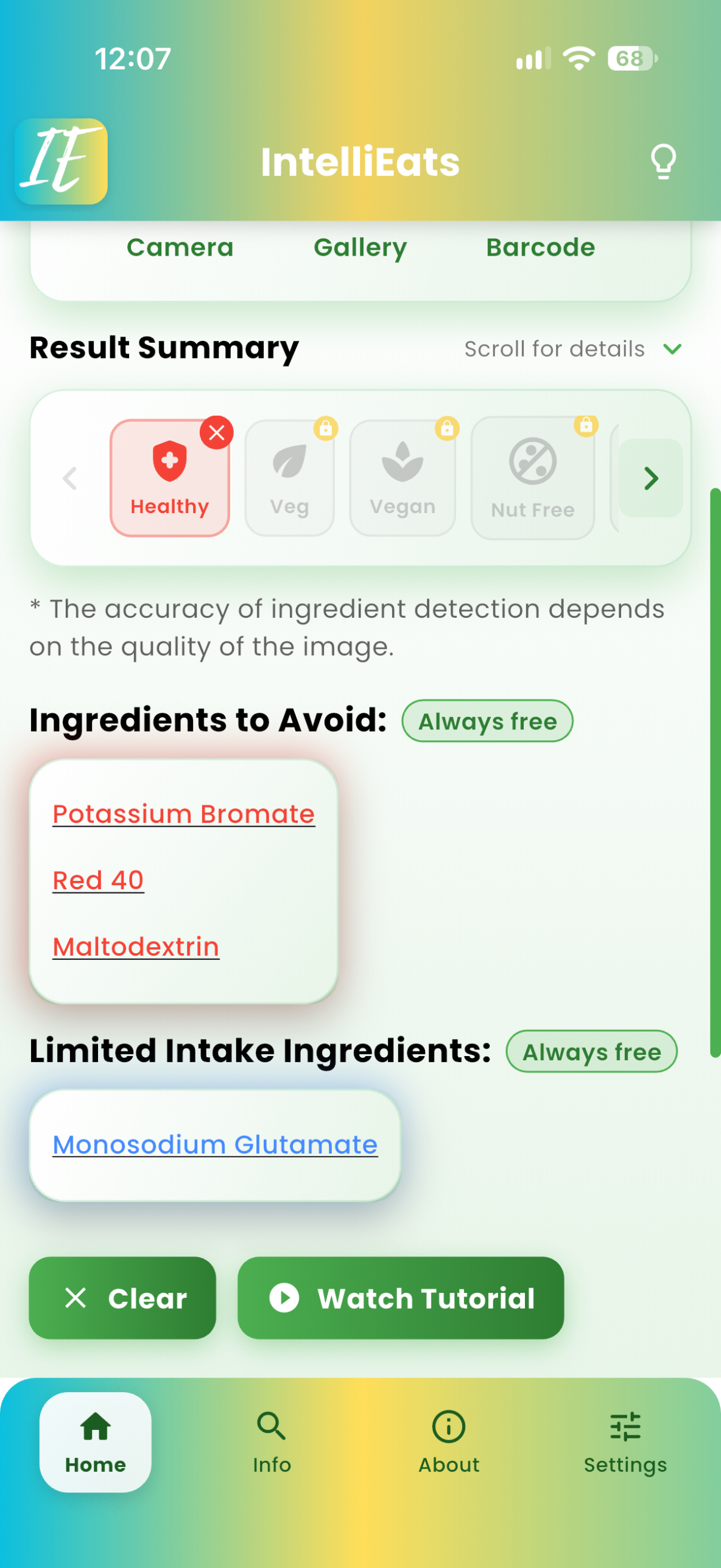
How IntelliEats Can Help You Check Food Colors
Ingredient lists may contain unfamiliar names, abbreviations, preservatives, colors, emulsifiers, and sweeteners. Instead of typing every ingredient into a search engine, scan the label with your camera or a gallery image.
- Scan — capture the ingredient list.
- Learn — IntelliEats identifies and explains ingredients.
- Compare — scan another product and compare.
- Decide — choose what fits your preferences.
Dietary detection: vegetarian, vegan, nut-free, gluten-free, lactose-free, and keto.
IntelliEats is an informational tool and does not replace the product label or professional medical advice.
A Simple Strategy for Reducing Artificial Colors
Choose fewer highly colored ultra-processed foods
Candy, bright drinks, desserts, and some snacks can contain multiple additives, including colors.
Compare similar products
Two similar cereals or snacks may have very different ingredient lists.
Look for naturally colored alternatives
Some manufacturers use colors from fruits, vegetables, spices, or algae.
Don’t rely only on the front of the package
“Natural” or “made with real ingredients” doesn’t replace the ingredient list.
Focus on the whole diet
A healthy pattern involves much more than one product containing Red 40 or Yellow 5.
Quick Reference: Common Food Colors
| Color | Common Label Name | Typical Uses |
|---|---|---|
| Red | Red 40 / FD&C Red No. 40 | Candy, cereal, beverages, desserts |
| Red | Red 3 / FD&C Red No. 3 | Historically certain candies and desserts; U.S. food authorization is being phased out |
| Yellow | Yellow 5 / FD&C Yellow No. 5 | Candy, cereal, beverages, baked goods |
| Yellow | Yellow 6 / FD&C Yellow No. 6 | Cereals, snacks, beverages, baked goods |
| Blue | Blue 1 / FD&C Blue No. 1 | Candy, beverages, cereals, desserts |
| Blue | Blue 2 / FD&C Blue No. 2 | Cereals, baked goods, confections |
| Green | Green 3 / FD&C Green No. 3 | Cereals, ice cream, sherbet, baked goods |
Frequently Asked Questions
Are artificial food colors the same as food additives?
Food colors are a type of food additive, but not all additives are colors. Additives also include preservatives, emulsifiers, stabilizers, sweeteners, and antioxidants.
Is Red 40 banned in the United States?
No. As of September 2026, FDA authorization for Red 40 remains in place, although the FDA is encouraging industry to move away from several petroleum-based colors. This differs from Red 3, revoked in 2025 with a food reformulation deadline of January 15, 2027.
Is Yellow 5 safe?
Yellow 5 is FDA-approved for specified food uses. Some individuals may have sensitivities, so anyone who suspects a reaction should talk to a healthcare professional.
Are natural food colors healthier?
Not automatically. The word “natural” alone does not determine the nutritional quality of the food.
How can I avoid artificial colors?
Check the ingredient list for Red 40, Yellow 5, Yellow 6, Blue 1, Blue 2, and Green 3, compare products, and look for alternatives with naturally derived or no added colors.
Why are food manufacturers using colors?
To compensate for color loss, correct natural variation, enhance existing color, color otherwise colorless foods, and create a consistent appearance.
The Bottom Line
Artificial food colors are used mainly for appearance, consistency, and consumer appeal. Learn to identify the ingredient, understand its regulatory status, consider the current evidence, and look at the food as a whole.
Less confusion. More confidence. That’s the goal of IntelliEats.
Related IntelliEats Articles
Continue learning about food ingredients:
References and Further Reading
- U.S. Food and Drug Administration — Color Additives in Foods
- U.S. Food and Drug Administration — Color Additives: Information for Consumers
- U.S. Food and Drug Administration — Color Additives Questions and Answers for Consumers
- U.S. Food and Drug Administration — How Safe are Color Additives?
- U.S. Food and Drug Administration — Understanding How the FDA Regulates Color Additives
- U.S. Food and Drug Administration — Summary of Color Additives for Use in the United States
- U.S. Food and Drug Administration — FD&C Red No. 3
- U.S. Food and Drug Administration — FDA Takes New Approach to “No Artificial Colors” Claims
Last reviewed: September 2026
Disclaimer: This article is intended for general educational purposes. It does not provide medical, diagnostic, or individualized dietary advice. Food regulations and scientific evidence may change over time.
Research & Regulatory Further Reading
The sources below provide background on food labeling, regulation, and research relevant to this topic. They do not establish that any individual ingredient is harmful at typical food exposure levels.
Medical Disclaimer
The information in this article is provided for educational purposes only and is not intended as medical, nutritional, or dietary advice. Ingredients approved by regulatory authorities are considered safe when used within established limits. Always consult a qualified healthcare professional or registered dietitian for guidance tailored to your personal health needs. See our Editorial Policy to learn how we research and review our content.