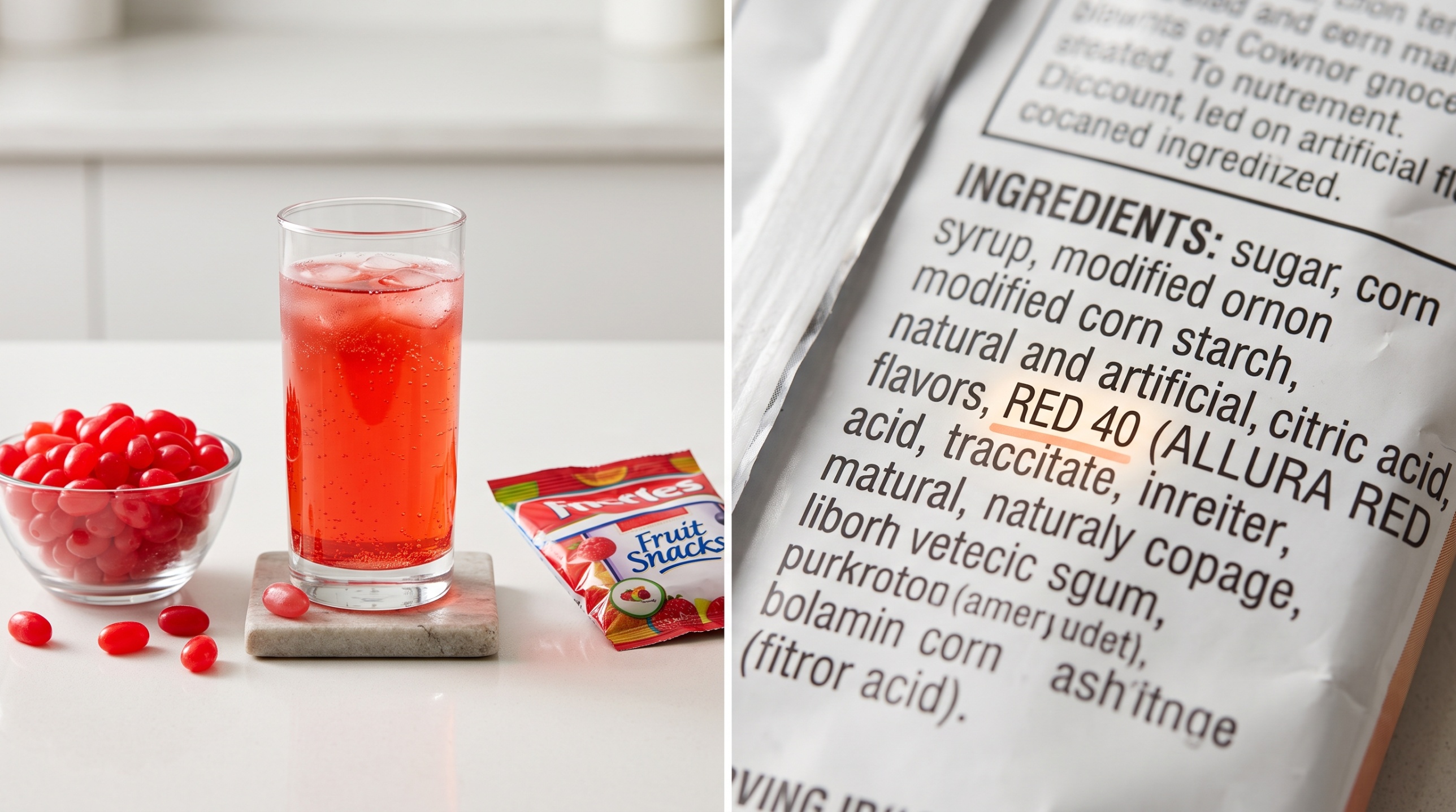
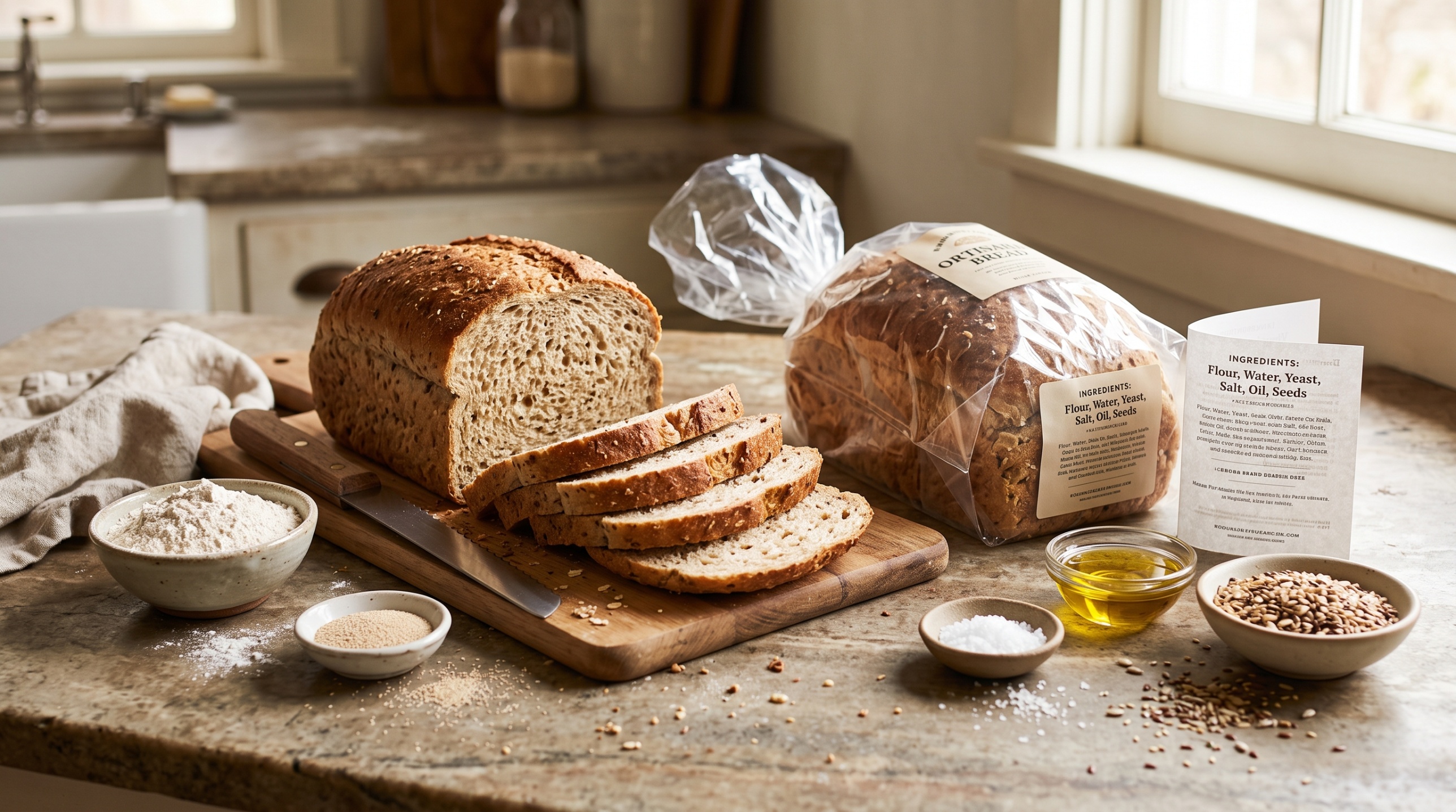
How to Read a Food Label in 60 Seconds: A Simple Guide for Smarter Grocery Shopping
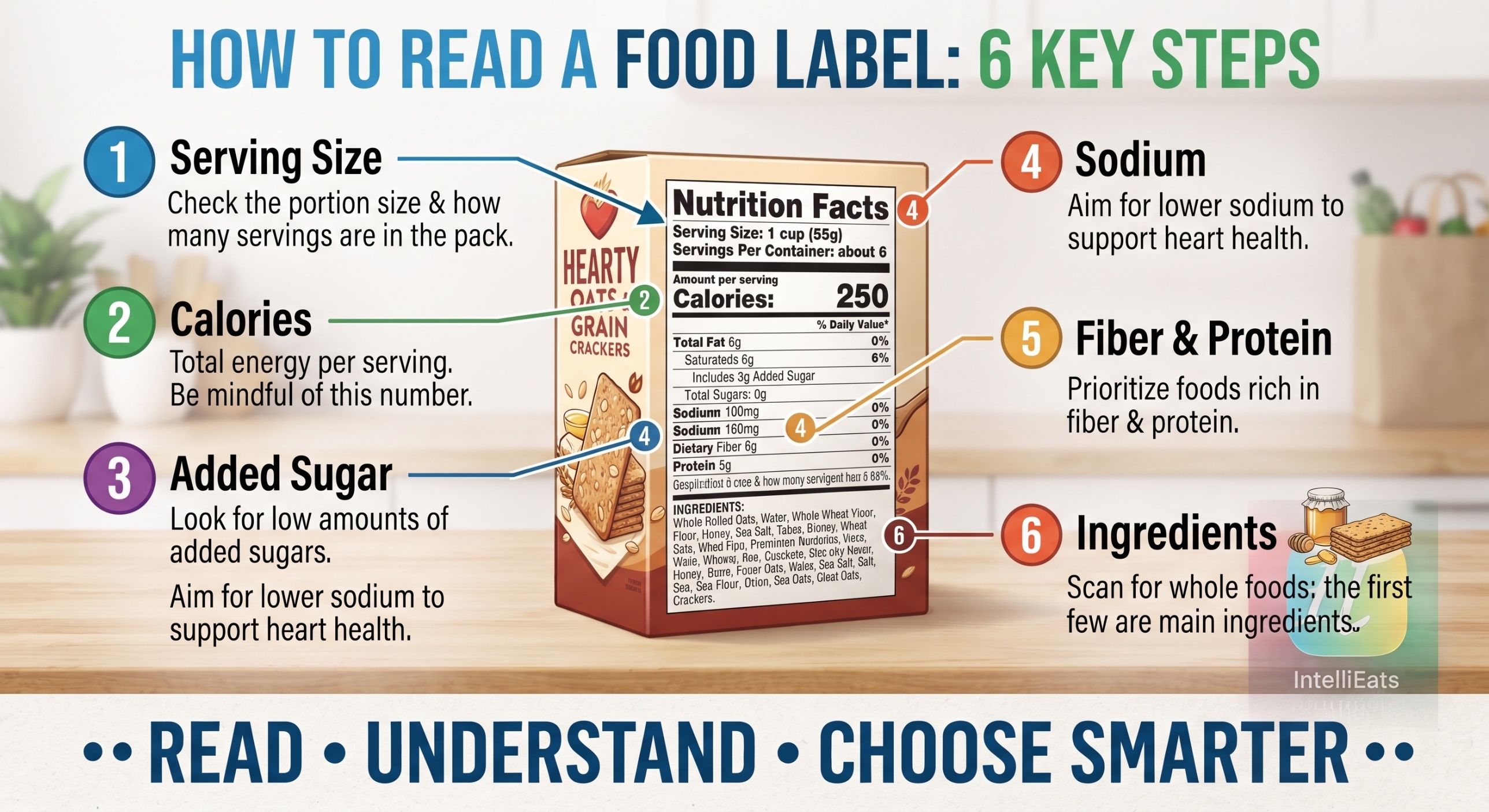
Have you ever picked up a box of cereal, a granola bar, or a bag of chips and looked at the back of the package only to find a long list of numbers and unfamiliar ingredients?
You are not alone.
Food labels can look complicated, but you don’t need to understand every word to make a more informed choice. With a simple routine, you can evaluate most packaged foods in about 60 seconds.
The key is to focus on a few things:
- Serving size
- Added sugar
- Sodium
- Saturated fat
- Fiber and protein
- The ingredient list
- Marketing claims
This guide walks you through each step so you can quickly compare products while grocery shopping.
The 60-Second Food Label Method
Here’s the simple method we’ll use:
- 10–10 secondsServing size
- 210–20 secondsCalories
- 320–30 secondsAdded sugar
- 430–40 secondsSodium & saturated fat
- 540–50 secondsFiber & protein
- 650–60 secondsIngredient list & claims
You don’t have to calculate everything precisely. The goal is to identify the most important information quickly and compare similar products.
Step 1: Check the Serving Size — 0 to 10 Seconds
Before looking at calories, sugar, or fat, look at the serving size. This is one of the most commonly overlooked parts of a Nutrition Facts label.
For example, a package might say Serving size: 1 cup — but the package may contain 2 servings. If you eat the entire package, you may need to multiply the listed amounts by two.
Example
| Nutrient | Per Serving | Entire Package |
|---|---|---|
| Calories | 150 | 300 |
| Sugar | 8 g | 16 g |
| Sodium | 250 mg | 500 mg |
The numbers on the label aren’t wrong—they are simply based on the stated serving size.
Quick Question
“How much am I actually going to eat?”
That gives you a more realistic picture of your intake.
Step 2: Look at Calories — 10 to 20 Seconds
Calories indicate how much energy a serving provides. But calories should not be viewed in isolation. A food with more calories isn’t automatically unhealthy.
Nuts
Can be calorie-dense but provide protein, unsaturated fats, and other nutrients.
A sugary drink
May have fewer calories per serving but provide relatively little nutritional value.
Use calories as one piece of the puzzle.
Step 3: Check Added Sugar — 20 to 30 Seconds
One of the most useful additions to the modern Nutrition Facts label is Added Sugars — sugars added during processing or preparation. Examples include:
Sugar
Brown sugar
Cane sugar
Honey
Maple syrup
Corn syrup
High-fructose corn syrup
Dextrose
Glucose syrup
Molasses
Why Check Added Sugar?
The American Heart Association and dietary guidance encourage limiting excessive intake of added sugars. When comparing similar products, a lower amount of added sugar can be a useful consideration.
Don’t Confuse Added Sugar With Total Sugar
Total Sugars can include naturally occurring sugars. Plain milk contains naturally occurring lactose, and fruit contains naturally occurring sugars. That doesn’t mean these foods are equivalent to a sugary dessert. Look specifically at the Added Sugars line.
Step 4: Check Sodium and Saturated Fat — 30 to 40 Seconds
Sodium
High sodium intake can contribute to excessive sodium consumption, particularly when many processed foods are eaten regularly. Common sources include:
Chips
Instant noodles
Frozen meals
Canned soups
Processed meats
Sauces
Crackers
Saturated Fat
Saturated fat is found naturally in foods such as butter, cheese, whole milk, and meat. It can also be present in many packaged foods. When comparing similar products, looking for options lower in saturated fat can be useful.
Step 5: Look for Fiber and Protein — 40 to 50 Seconds
Fiber
Whole grains
Beans
Lentils
Fruits
Vegetables
Nuts
Seeds
When choosing between similar products, a higher-fiber option may be preferable.
Protein
Protein can help make a snack or meal more filling. Common sources include:
Milk
Yogurt
Eggs
Beans
Nuts & seeds
Meat
Fish
Soy foods
Again, the appropriate amount depends on the food and your individual dietary needs.
Step 6: Read the Ingredient List — 50 to 60 Seconds
Now comes the part that makes IntelliEats particularly useful. The ingredient list tells you what the product is made from. In the United States, ingredients are generally listed in descending order by weight, so the ingredients used in the greatest amounts generally appear first.
Example
Whole grain oats, sugar, corn flour, raisins, sunflower oil, salt, natural flavor.
The first few ingredients tell you a lot about the product. You can also look for:
Whole grains
Fruits
Vegetables
Oils
Added sugars
Preservatives
Colors
Flavorings
Sweeteners
Emulsifiers
Don’t Be Scared by Long Ingredient Names
A long chemical-sounding name doesn’t automatically mean an ingredient is harmful.
| Label Name | Familiar Name / Function |
|---|---|
| Ascorbic acid | Vitamin C |
| Sodium bicarbonate | Baking soda |
| Tocopherols | Forms of vitamin E |
| Citric acid | Acidity regulator |
| Pectin | Thickener |
| Lecithin | Emulsifier |
Food science uses standardized names for many ingredients. Instead of asking “Does this ingredient sound scary?” ask:
“What is this ingredient, and why is it in the food?”
What About Food Additives?
Food additives may be used to prevent spoilage, maintain texture, improve stability, control acidity, prevent clumping, add color, or enhance flavor. Common examples include:
| Ingredient | Common Function |
|---|---|
| Citric Acid | Acidity regulator |
| Pectin | Thickener |
| Xanthan Gum | Stabilizer/thickener |
| Lecithin | Emulsifier |
| Potassium Sorbate | Preservative |
| Ascorbic Acid | Antioxidant |
| Silicon Dioxide | Anti-caking agent |
The presence of an additive does not automatically determine whether a food is nutritious or unhealthy. Consider the whole product.
Don’t Trust the Front of the Package Alone
Food manufacturers use front-of-package terms to communicate specific product characteristics, such as:
- Natural
- Organic
- Multigrain
- Made with whole grains
- Light
- Low fat
- No added sugar
- Gluten-free
- Plant-based
These terms can be useful, but they don’t replace reading the Nutrition Facts panel and ingredient list. A product labeled “Made with whole grains” may still contain significant amounts of refined grains or added sugar.
“Natural” Doesn’t Automatically Mean Healthy
A product containing natural flavors or natural ingredients isn’t automatically healthier than another product.
Product A
- Natural flavor
- High added sugar
- Low fiber
Product B
- Artificial flavor
- Lower added sugar
- Higher fiber
- More protein
If you’re comparing nutritional quality, the word “natural” alone doesn’t answer the question. Read the entire label.
“Organic” Doesn’t Mean Unlimited
Organic labeling does not mean a product is automatically low in sugar, calories, sodium, or saturated fat. An organic cookie is still a cookie. Look beyond the front-of-package claims.
Understanding % Daily Value
% Daily Value (%DV) helps you understand how much a nutrient in one serving contributes to a daily diet. A useful general guide:
5% DV or less
Considered low
20% DV or more
Considered high
These values can help when comparing products, though your individual nutritional requirements may differ.
A 60-Second Example
Let’s say you’re comparing two granola bars.
Granola Bar A
- 190 calories
- 12 g added sugar
- 250 mg sodium
- 2 g fiber
- 4 g protein
Ingredients begin with: Oats, sugar, corn syrup, chocolate chips…
Granola Bar B
- 180 calories
- 5 g added sugar
- 140 mg sodium
- 5 g fiber
- 7 g protein
Ingredients begin with: Whole grain oats, almonds, dates, seeds…
You can make a reasonably informed comparison in less than a minute. The second product may be preferable for someone looking for more fiber and protein and less added sugar, assuming it fits their dietary needs.
How IntelliEats Makes Reading Food Labels Easier
A typical packaged food may contain 10, 20, or even 30+ ingredients. Some are familiar, while others have technical names that are difficult to recognize at a glance. IntelliEats is designed to help shoppers scan and understand food ingredient labels so they can make more informed choices.
- Find the ingredient list on the package.
- Scan the label with the camera, or use a photo from your gallery.
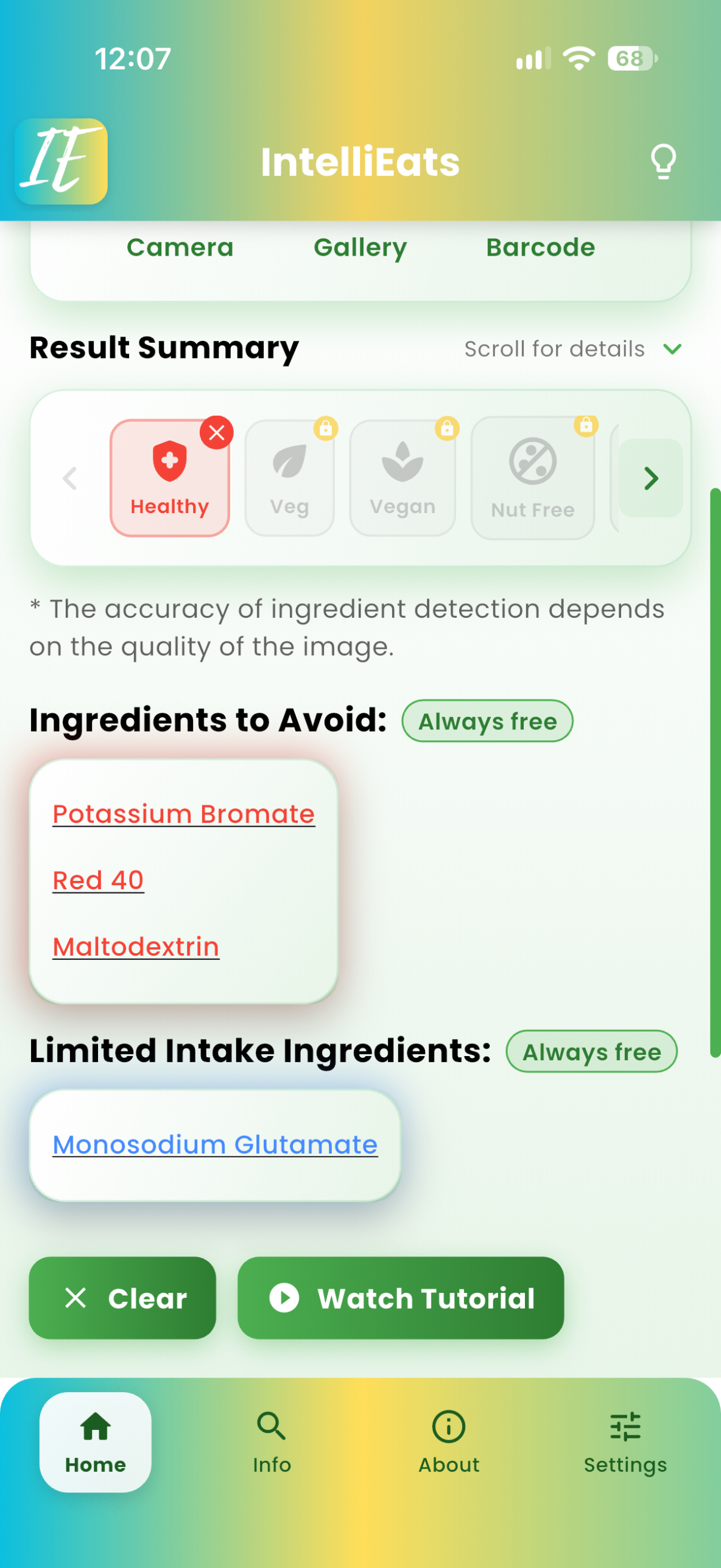
- Review the results — IntelliEats highlights ingredients in categories you may want to pay attention to. Core scanning and analysis features are free.
- Learn what the ingredients mean, with research-based information and references.
IntelliEats can help bring attention to:
Preservatives · Artificial colors · Flavoring ingredients · Sweeteners · Emulsifiers · Stabilizers · Other ingredients you may want to research further
The purpose is not to tell you that every unfamiliar ingredient is “bad” — it’s to help you notice ingredients and learn more about them.
IntelliEats for Different Dietary Preferences
Food labels become even more complicated when you follow a particular dietary pattern: “Is this food vegetarian?” “Does this product fit a vegan diet?” “Does this list contain something I want to avoid?” IntelliEats includes dietary detection features for:
| Dietary Preference | IntelliEats |
|---|---|
| Vegetarian | ✓ |
| Vegan | ✓ |
| Nut-Free | ✓ |
| Gluten-Free | ✓ |
| Lactose-Free | ✓ |
| Keto | ✓ |
Why an Ingredient Scanner Can Be Useful
Imagine comparing two snack bars. The first ingredient list says:
Whole grain oats, cane sugar, sunflower oil, natural flavor, lecithin, citric acid…
The second contains:
Oats, dates, almonds, cocoa, chia seeds, vanilla…
Without an ingredient reference, you might spend several minutes researching unfamiliar terms. With a scanner, you can quickly get additional information and decide which product better fits your preferences. The scanner doesn’t replace your judgment—it gives you more information to use.
IntelliEats Doesn’t Replace the Food Label
Always look at the actual package. Food manufacturers can change formulations, change ingredient suppliers, update recipes, introduce new products, and change allergen information. The package in your hand is the most current source.
A Better Way to Think About Food Scanning
Think of an ingredient scanner as a pocket ingredient guide, not a source of fear.
Instead of
- “This ingredient sounds complicated, so it must be bad.”
Try
- “I don’t recognize this ingredient. Let me learn what it is and why it’s being used.”
A 60-Second Shopping Routine With IntelliEats
- 10–10 secondsCheck the serving size.
- 210–20 secondsCheck calories.
- 320–30 secondsCheck added sugar.
- 430–40 secondsCheck sodium and saturated fat.
- 540–50 secondsCheck fiber and protein.
- 650–60 secondsScan the ingredient list with IntelliEats.
Then ask: “Does this product fit my dietary needs and preferences?”
IntelliEats: Learn Before You Decide
Scan → Learn → Compare → Decide
Scan
Capture the ingredient label.
Learn
Understand unfamiliar ingredients and their functions.
Compare
Look at similar products and their ingredient and nutrition information.
Decide
Choose the product that best fits your personal preferences and dietary needs.
Try IntelliEats the Next Time You Shop
Turn the package around. Look at the Nutrition Facts panel. Read the ingredients. And if you come across ingredients you don’t recognize, use IntelliEats to help you investigate them.
Scan the label. Understand the ingredients. Make informed choices.
A Simple Food Label Checklist
Nutrition Facts
- What is the serving size?
- How many servings are in the package?
- How much added sugar?
- How much sodium?
- How much saturated fat?
- Does it provide meaningful fiber?
- Does it provide protein?
Ingredient List
- What are the first three ingredients?
- Is sugar listed near the beginning?
- Are there ingredients I’m unfamiliar with?
- Does it contain colors, preservatives, or sweeteners?
- Does it contain ingredients I personally need to avoid?
Final question: Does this food fit my dietary needs and the way I want to eat?
5 Common Food Label Mistakes
Looking only at calories
Calories don’t tell you everything about a food.
Ignoring serving size
A package may contain multiple servings.
Looking only at the front
Marketing claims don’t replace the ingredient list.
Assuming “natural” means healthy
Natural describes an ingredient or flavor—not overall nutritional quality.
Avoiding an ingredient just because you don’t recognize it
Learn what it does before deciding whether it matters to you.
Food Labels for Children
Parents may want to pay attention to added sugars, sodium, fiber, protein, portion size, and overall ingredient quality. Compare similar products rather than trying to find a “perfect” packaged food.
| Bar A | Bar B | |
|---|---|---|
| Added Sugar | 10 g | 4 g |
| Fiber | 2 g | 5 g |
| Protein | 3 g | 6 g |
| Sodium | 180 mg | 100 mg |
What About Pregnancy?
Pregnant consumers may need to pay particular attention to alcohol, caffeine, unpasteurized ingredients, certain seafood, added sugars, sodium, and food allergens. Pregnancy nutrition is highly individual, so discuss specific questions with a qualified healthcare professional. See our guide: Top 20 Ingredients to Be Aware of During Pregnancy.
Final 60-Second Formula
S → C → S → N → I
S — Serving Size
How much does one serving represent?
C — Calories
How much energy does it provide?
S — Sugar, Sodium & Saturated Fat
How much does it contain?
N — Nutrients
Look for fiber and protein.
I — Ingredients
What is actually in the product?
Then ask: “Does this food fit my needs?” You don’t need to memorize hundreds of ingredients to become a smarter food shopper.
Frequently Asked Questions
What should I look at first on a food label?
Start with the serving size. Then check added sugar, sodium, saturated fat, fiber, protein, and the ingredient list.
What are the most important ingredients to avoid?
There isn’t one universal list. Individual allergies, medical conditions, dietary preferences, and overall dietary patterns matter.
Are ingredients listed in order of quantity?
In general, U.S. food ingredients are listed by weight, with the ingredient present in the greatest amount listed first.
Is a shorter ingredient list always better?
No. A short ingredient list does not automatically mean a product is more nutritious.
Is natural food always healthier?
No. “Natural” does not automatically mean lower in sugar, sodium, calories, or saturated fat.
Should I avoid all food additives?
Not necessarily. Additives have different functions and safety profiles. Understanding why an additive is used is more useful than counting additives.
Conclusion
In just 60 seconds, you can learn a surprising amount about a packaged food by checking:
Serving size → Calories → Added sugar → Sodium & saturated fat → Fiber & protein → Ingredients
The goal isn’t to find a perfect food or eliminate every unfamiliar ingredient. It’s to become a more informed shopper—and when an ingredient list is hard to interpret, IntelliEats can help.
Read the label. Understand the ingredients. Choose what works for you.
Related IntelliEats Articles
Continue learning about food ingredients:
References
- U.S. Food and Drug Administration (FDA). How to Understand and Use the Nutrition Facts Label.
- U.S. Food and Drug Administration (FDA). Food Ingredients and Packaging.
- U.S. Food and Drug Administration (FDA). Added Sugars on the Nutrition Facts Label.
- U.S. Food and Drug Administration (FDA). Daily Value on the Nutrition and Supplement Facts Labels.
- U.S. Department of Agriculture (USDA). Dietary Guidelines for Americans, 2025–2030.
- Centers for Disease Control and Prevention (CDC). Healthy Eating for a Healthy Weight.
- U.S. Food and Drug Administration (FDA). Changes to the Nutrition Facts Label.
Research & Regulatory Further Reading
The sources below provide background on food labeling, regulation, and research relevant to this topic. They do not establish that any individual ingredient is harmful at typical food exposure levels.
Medical Disclaimer
The information in this article is provided for educational purposes only and is not intended as medical, nutritional, or dietary advice. Ingredients approved by regulatory authorities are considered safe when used within established limits. Always consult a qualified healthcare professional or registered dietitian for guidance tailored to your personal health needs. See our Editorial Policy to learn how we research and review our content.