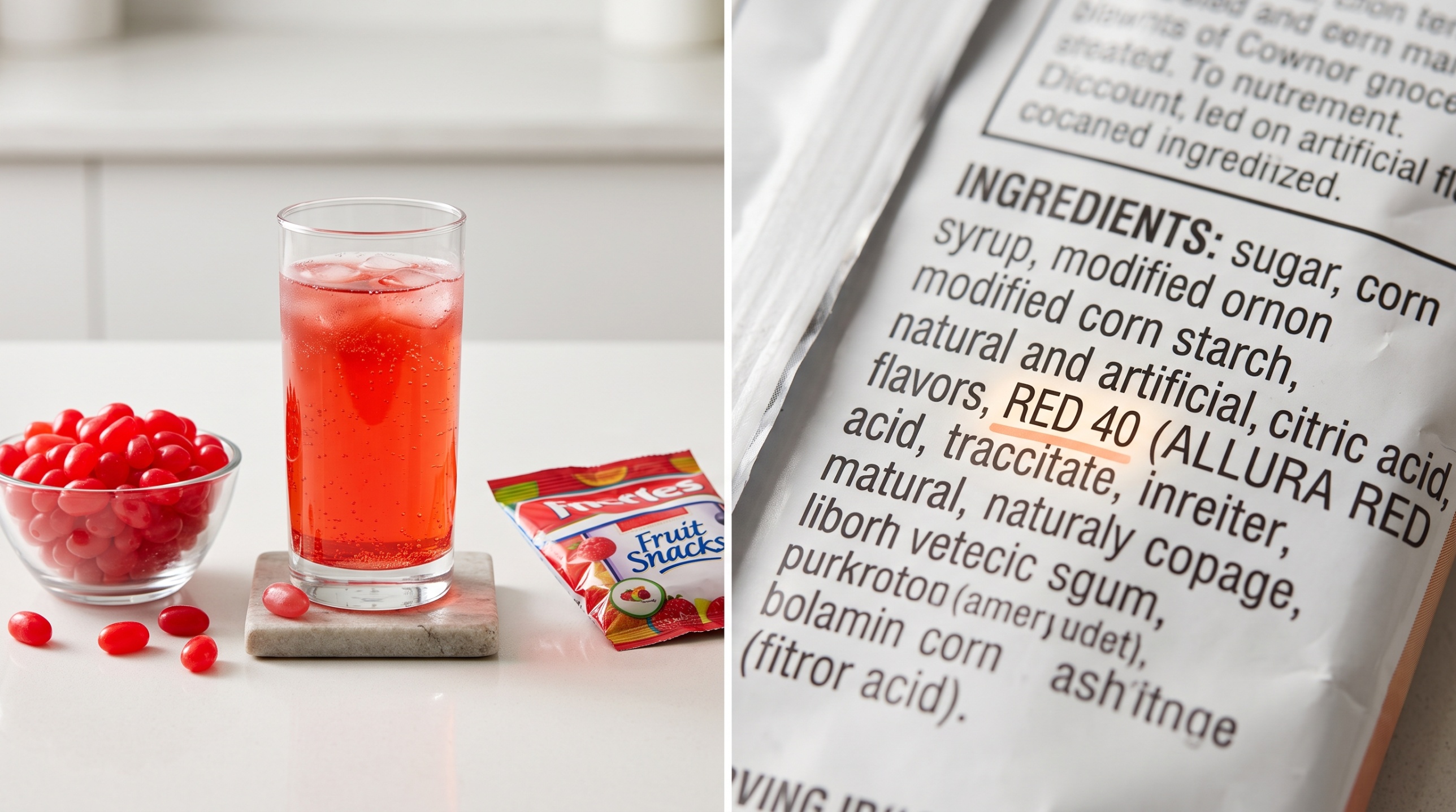
Understanding E Numbers: What They Mean, Are They Safe, and How to Read Food Labels
Have you ever picked up a package of imported cookies, candy, chocolate, or snacks and noticed ingredients like E300, E322, or E621?
If you’re like many shoppers, you may have wondered:
- Are E numbers harmful?
- Are they artificial chemicals?
- Why don’t U.S. food labels use them?
- Should I avoid foods that contain E numbers?
These are common questions—and they’re often surrounded by myths and misinformation.
The good news is that an E number is not automatically something to fear.
In fact, some E numbers refer to familiar ingredients that many people consume every day, such as Vitamin C, pectin from fruit, or lecithin from soybeans.
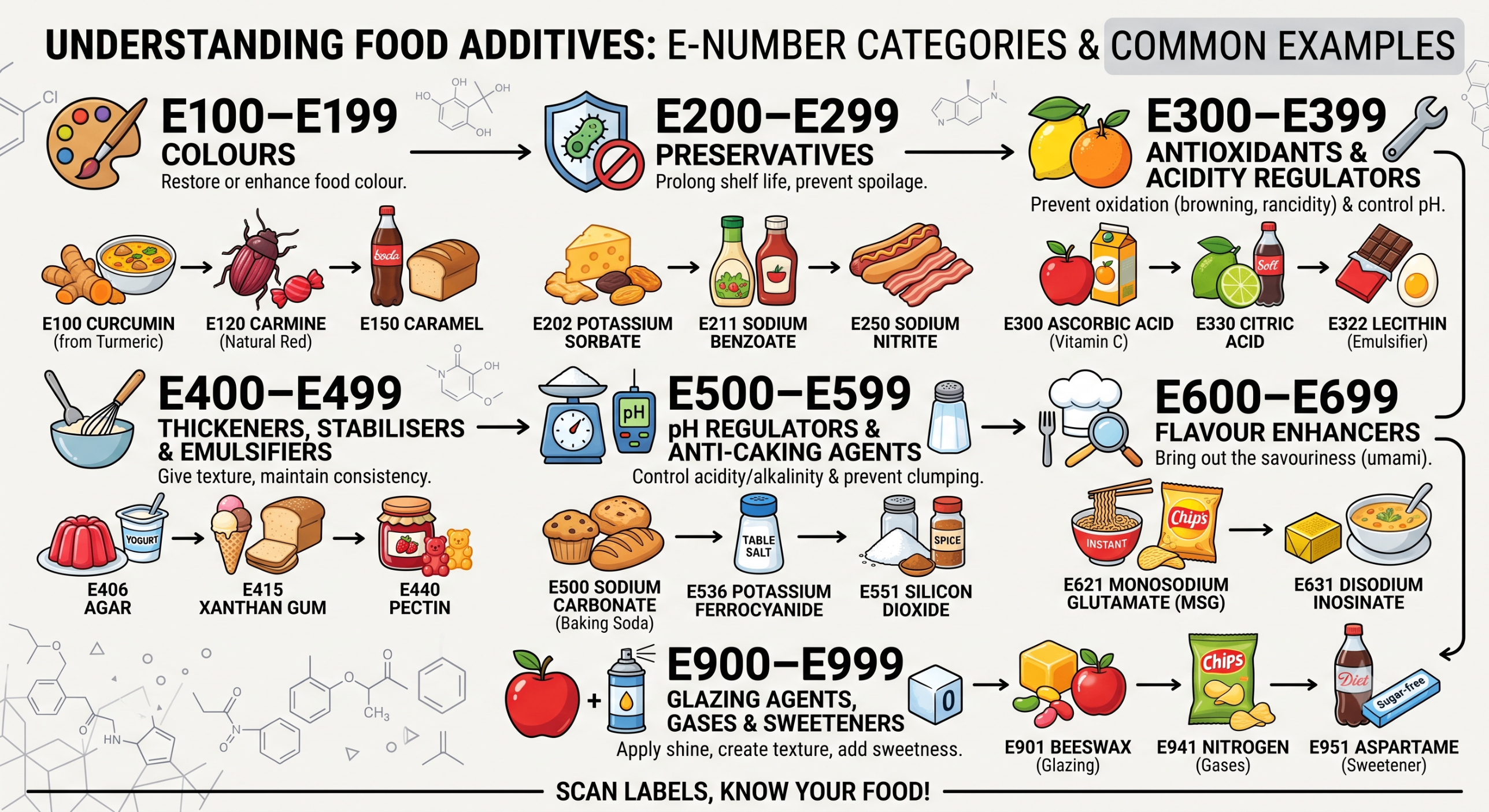
This guide explains what E numbers are, why they exist, how they’re regulated, and how to interpret them with confidence.
What Are E Numbers?
An E number is a standardized identification code assigned to a food additive that has been evaluated and approved for use in foods by European food safety authorities.
The “E” stands for Europe.
Instead of listing the full chemical or common name, manufacturers in many countries can identify approved additives using their E number.
| E Number | Ingredient Name | Purpose |
|---|---|---|
| E300 | Ascorbic Acid (Vitamin C) | Antioxidant |
| E322 | Lecithin | Emulsifier |
| E330 | Citric Acid | Acidity Regulator |
| E406 | Agar | Thickener |
| E440 | Pectin | Thickener |
Many of these ingredients occur naturally in fruits, vegetables, or plants.
Why Do E Numbers Exist?
Imagine trying to read an ingredient list containing long scientific names.
Instead of: Ascorbic Acid
a label might simply say: E300
Instead of: Monosodium Glutamate
it might say: E621
The numbering system creates a standardized way to identify additives across different languages within Europe. A product sold in Germany, France, Italy, or Spain can use the same E number regardless of language.
Are E Numbers Only Used in Europe?
E numbers are primarily used in European Union countries, United Kingdom, several Middle Eastern countries, Australia and New Zealand (on some products), and many imported international foods.
In the United States, ingredient labels usually list the additive’s full name instead of its E number.
| Europe | United States |
|---|---|
| E300 | Ascorbic Acid |
| E621 | Monosodium Glutamate |
| E322 | Lecithin |
| E330 | Citric Acid |
Although the labeling systems differ, many of the same additives are used in foods sold worldwide, subject to each country’s regulations.
Are E Numbers Safe?
This is the question most people ask first.
The answer is more nuanced than a simple “yes” or “no.”
Before an additive receives an E number, it undergoes scientific evaluation to determine whether it can be safely used under specific conditions.
Safety assessments consider:
Toxicology studies
Exposure levels
How the additive is used
Dietary intake
Sensitive populations
Food safety authorities may establish an Acceptable Daily Intake (ADI) for some additives. The ADI is the amount that can be consumed every day over a lifetime without an expected health risk. It includes a substantial safety margin.
As new evidence becomes available, authorities may reassess additives, update usage limits, restrict certain uses, or remove approval if warranted. This ongoing review process is an important part of modern food safety systems.
Who Decides Which E Numbers Are Approved?
Several scientific organizations evaluate food additives. Major organizations include:
| Organization | Region |
|---|---|
| European Food Safety Authority (EFSA) | European Union |
| Joint FAO/WHO Expert Committee on Food Additives (JECFA) | International |
| U.S. Food and Drug Administration (FDA) | United States |
| Health Canada | Canada |
| Food Standards Australia New Zealand (FSANZ) | Australia & New Zealand |
Although these organizations often reach similar conclusions, regulations can differ between countries because reviews may occur at different times or interpret available evidence differently.
Common Myths About E Numbers
Myth 1: Every E Number Is Artificial
Fact
Many E numbers come from natural sources:
E300
Vitamin C
E406
Seaweed
E440
Apples and citrus fruits
E160a
Carrots
Myth 2: E Numbers Are Dangerous Chemicals
Everything we eat—including water, vitamins, and minerals—is made of chemicals. An E number simply identifies an approved food additive. It does not indicate that an ingredient is harmful.
Myth 3: Foods Without E Numbers Are Always Healthier
Not necessarily. A cookie made with large amounts of sugar and saturated fat may contain very few additives, while a whole-grain yogurt with pectin and vitamin C may contain several E numbers and still be a more nutritious choice. Always consider the overall nutritional quality of the food.
Categories of E Numbers
E numbers are grouped by their function. Learning these categories makes ingredient labels much easier to understand.
| E Number Range | Category | Purpose |
|---|---|---|
| E100–E199 | Colors | Improve or restore color |
| E200–E299 | Preservatives | Prevent spoilage |
| E300–E399 | Antioxidants & Acidity Regulators | Protect freshness and control pH |
| E400–E499 | Thickeners, Stabilizers & Emulsifiers | Improve texture |
| E500–E599 | Acidity Regulators & Anti-Caking Agents | Improve stability |
| E600–E699 | Flavor Enhancers | Enhance taste |
| E900–E999 | Coating Agents, Sweeteners & Others | Various functions |
| E1000+ | Additional approved additives | Specialized uses |
Rather than memorizing every number, recognizing these categories can help you quickly understand what an additive is likely doing in a food.
Some of the Most Common E Numbers
Here are a few you’ll frequently encounter:
| E Number | Name | Purpose | Common Foods |
|---|---|---|---|
| E300 | Ascorbic Acid | Antioxidant | Fruit juices, bread |
| E322 | Lecithin | Emulsifier | Chocolate, peanut butter |
| E330 | Citric Acid | Acidity regulator | Soft drinks, candy |
| E406 | Agar | Thickener | Plant-based desserts |
| E412 | Guar Gum | Thickener | Ice cream |
| E415 | Xanthan Gum | Stabilizer | Salad dressing |
| E440 | Pectin | Thickener | Jam, yogurt |
| E621 | MSG | Flavor enhancer | Soups, chips |
These ingredients serve different purposes, and many are found in everyday foods.
Interactive reference
E-number directory
Select an E number to see its name, primary use, and source.
61 common entries
Why Learning About E Numbers Matters
Understanding E numbers can help you:
- Read imported food labels with confidence
- Compare similar products
- Understand ingredient functions
- Separate myths from facts
- Make informed grocery shopping decisions
- Choose foods that align with your dietary preferences
Knowledge empowers you to evaluate foods based on evidence rather than unfamiliar names.
The Most Common E Numbers You’ll Find on Food Labels
Now that you understand what E numbers are and why they exist, let’s look at the additives you’re most likely to see on ingredient labels. Rather than memorizing hundreds of E numbers, it’s more useful to recognize the most common ones and understand their purpose.
E100–E199: Food Colors
These additives improve or restore the color of foods. Some come from natural sources, while others are synthetic.
| E Number | Name | Source | Common Foods |
|---|---|---|---|
| E100 | Curcumin | Turmeric | Mustard, sauces, snacks |
| E101 | Riboflavin (Vitamin B2) | Natural vitamin | Breakfast cereals, dairy |
| E120 | Carmine | Insects (cochineal) | Yogurt, candy, beverages |
| E140 | Chlorophyll | Plants | Mint products, beverages |
| E150a–d | Caramel Color | Sugar | Soft drinks, sauces |
| E160a | Beta-Carotene | Carrots | Margarine, cheese |
| E160b | Annatto | Seeds | Cheese, butter |
| E162 | Beetroot Red | Beetroot | Yogurt, desserts |
| E163 | Anthocyanins | Berries & grapes | Juice, candy |
Things to Know:
- Many color additives are derived from plants.
- Carmine (E120) is animal-derived, which may be relevant for vegetarians, vegans, or certain religious dietary practices.
- Synthetic colors approved for use are evaluated by regulators, but some families choose to limit them based on personal preference or if a child appears sensitive.
E200–E299: Preservatives
Preservatives help extend shelf life and reduce spoilage caused by bacteria, yeast, and mold.
| E Number | Name | Purpose | Common Foods |
|---|---|---|---|
| E200 | Sorbic Acid | Prevent mold | Cheese |
| E202 | Potassium Sorbate | Prevent mold | Yogurt |
| E210 | Benzoic Acid | Preserve beverages | Soft drinks |
| E211 | Sodium Benzoate | Prevent bacteria | Fruit drinks |
| E220 | Sulfur Dioxide | Preserve dried fruit | Raisins |
| E249 | Potassium Nitrite | Cure meat | Sausage |
| E250 | Sodium Nitrite | Cure meat | Bacon |
| E251 | Sodium Nitrate | Preserve meat | Deli meats |
Things to Know:
- Preservatives improve food safety by slowing spoilage.
- Nitrites and nitrates are commonly used in processed meats. Many health organizations recommend limiting processed meat intake as part of a healthy diet.
E300–E399: Antioxidants & Acidity Regulators
These additives help maintain freshness, control acidity, and prevent oxidation.
| E Number | Name | Function | Common Foods |
|---|---|---|---|
| E300 | Ascorbic Acid | Vitamin C, antioxidant | Juice, bread |
| E301 | Sodium Ascorbate | Antioxidant | Processed meats |
| E306 | Mixed Tocopherols | Vitamin E | Snacks, oils |
| E322 | Lecithin | Emulsifier | Chocolate, peanut butter |
| E325 | Sodium Lactate | Acidity regulator | Meat products |
| E330 | Citric Acid | pH control | Candy, soda |
| E331 | Sodium Citrate | Buffer | Cheese, beverages |
| E338 | Phosphoric Acid | Acidity | Cola drinks |
Things to Know:
- E300 is simply Vitamin C.
- Citric acid occurs naturally in citrus fruits, although commercial citric acid is usually produced by fermentation.
- Lecithin is often sourced from soy or sunflower and helps keep oil and water mixed.
E400–E499: Thickeners, Stabilizers & Emulsifiers
These additives improve texture and consistency.
| E Number | Name | Source | Common Foods |
|---|---|---|---|
| E406 | Agar | Red seaweed | Jelly desserts |
| E407 | Carrageenan | Red seaweed | Dairy products |
| E410 | Locust Bean Gum | Carob seeds | Ice cream |
| E412 | Guar Gum | Guar beans | Sauces |
| E414 | Gum Arabic | Acacia tree | Candy |
| E415 | Xanthan Gum | Fermentation | Salad dressing |
| E440 | Pectin | Apples, citrus | Jam |
| E471 | Mono- & Diglycerides | Vegetable oils | Bread |
Things to Know:
- Many of these additives come from plants or seaweed.
- Carrageenan remains approved for use in many countries, though some consumers prefer to avoid it because research is ongoing.
E500–E599: Acidity Regulators & Anti-Caking Agents
These ingredients help maintain texture and prevent powdered foods from clumping.
| E Number | Name | Purpose |
|---|---|---|
| E500 | Sodium Carbonate | Baking |
| E500(ii) | Sodium Bicarbonate | Baking soda |
| E504 | Magnesium Carbonate | Anti-caking |
| E509 | Calcium Chloride | Firmness |
| E551 | Silicon Dioxide | Prevent clumping |
Where You’ll Find Them:
Baking powder
Grated cheese
Powdered drink mixes
Seasonings
Spice blends
E600–E699: Flavor Enhancers
These additives boost savory or umami flavors.
| E Number | Name | Common Foods |
|---|---|---|
| E620 | Glutamic Acid | Soups |
| E621 | Monosodium Glutamate (MSG) | Chips, noodles |
| E627 | Disodium Guanylate | Snacks |
| E631 | Disodium Inosinate | Instant noodles |
| E635 | Disodium Ribonucleotides | Seasoning blends |
Current Evidence: MSG has been extensively studied and is generally considered safe for the general population at typical dietary levels. Some individuals report temporary symptoms after consuming large amounts, but research has not consistently confirmed a direct cause-and-effect relationship.
E900–E999: Sweeteners, Coatings & Other Additives
This range includes a variety of specialized additives.
| E Number | Name | Function |
|---|---|---|
| E901 | Beeswax | Glazing agent |
| E903 | Carnauba Wax | Fruit coating |
| E904 | Shellac | Candy coating |
| E950 | Acesulfame Potassium | Sweetener |
| E951 | Aspartame | Sweetener |
| E955 | Sucralose | Sweetener |
| E960 | Steviol Glycosides | Stevia sweetener |
| E967 | Xylitol | Sugar alcohol |
Things to Know:
Beeswax and shellac are animal-derived. Carnauba wax comes from the leaves of the Brazilian carnauba palm. Sweeteners approved for use are evaluated for safety within established intake limits.
Natural vs. Synthetic E Numbers
Many people assume every E number is artificial, but that’s not true.
| Natural E Numbers | Source |
|---|---|
| E100 | Turmeric |
| E101 | Vitamin B2 |
| E140 | Chlorophyll |
| E160a | Beta-Carotene |
| E162 | Beetroot |
| E163 | Berries |
| E300 | Vitamin C |
| E406 | Seaweed |
| E440 | Fruit |
| E901 | Beeswax |
Examples of commonly used synthetic or manufactured additives include: E211 (Sodium Benzoate), E621 (MSG), E950 (Acesulfame Potassium), and E951 (Aspartame).
Remember: whether an additive is natural or synthetic does not, by itself, determine its safety.
E Numbers Commonly Found in Children’s Foods
Parents often encounter these E numbers in packaged snacks:
| Food | Common E Numbers |
|---|---|
| Fruit Snacks | E330, E440, E162 |
| Yogurt | E440, E322 |
| Breakfast Cereal | E101, E160a |
| Ice Cream | E410, E412, E407 |
| Candy | E120, E162, E903 |
| Chips | E621, E627 |
| Soft Drinks | E330, E211 |
| Jam | E440, E300 |
Reading ingredient labels can help you understand why these additives are included.
Practical Shopping Advice
When evaluating a product:
- Focus on the overall nutritional quality.
- Compare similar products.
- Read both the ingredient list and the Nutrition Facts label.
- Don’t assume that a product with fewer E numbers is automatically healthier.
For example, a whole-grain yogurt with pectin (E440) and vitamin C (E300) may be a more nutritious choice than a candy with only a few additives but high amounts of added sugar.
A Practical Guide to Reading Food Labels with Confidence
By now, you’ve learned that E numbers are standardized codes used in Europe to identify approved food additives. You’ve also seen that many E numbers represent familiar ingredients like Vitamin C (E300), Pectin (E440), and Lecithin (E322).
The final step is learning how to use this knowledge in everyday life. Remember: the goal isn’t to memorize hundreds of E numbers. Instead, it’s to recognize patterns, understand ingredient functions, and make informed choices based on your family’s dietary needs and preferences.
E Numbers That Vegetarians and Vegans May Want to Check
Most E numbers are suitable for vegetarian and vegan diets, but some may come from animal sources or have animal-derived versions depending on the manufacturer.
| E Number | Ingredient | Typical Source | Vegan?* |
|---|---|---|---|
| E120 | Carmine | Cochineal insects | ❌ No |
| E322 | Lecithin | Soy or sunflower (sometimes egg) | Usually ✔ |
| E441 | Gelatin | Animal collagen | ❌ No |
| E542 | Edible Bone Phosphate | Animal bones | ❌ No |
| E901 | Beeswax | Bees | Often not considered vegan |
| E904 | Shellac | Lac insect | ❌ No |
| E920 | L-Cysteine | Can be synthetic or fermentation-derived; historically also from animal or human sources | Depends on source |
*If you follow a vegetarian, vegan, kosher, or halal diet, it’s best to check with the manufacturer when the source isn’t specified on the label.
E Numbers Parents Commonly Ask About
E211 – Sodium Benzoate
Purpose: Preservative
Found in: Soft drinks, Fruit juices, Sauces, Pickles
Current Understanding: Sodium benzoate is approved for use within established limits. Under certain conditions, it can react with vitamin C in acidic beverages to form very small amounts of benzene. Manufacturers use formulation controls to minimize this risk, and regulators monitor compliance with safety standards.
E250 – Sodium Nitrite
Purpose: Preserves cured meats and helps prevent bacterial growth.
Found in: Bacon, Ham, Hot dogs, Sausages
Current Understanding: Nitrites play an important food safety role, particularly in preventing Clostridium botulinum growth. At the same time, health organizations recommend limiting processed meat consumption as part of a balanced diet because frequent intake has been associated with certain long-term health risks.
E407 – Carrageenan
Purpose: Thickener and stabilizer
Found in: Chocolate milk, Ice cream, Plant-based beverages, Yogurt
Current Understanding: Food-grade carrageenan is approved by major food safety authorities. Some laboratory and animal studies have explored potential effects on inflammation, but evidence in humans remains limited and inconclusive. Some consumers still choose products without carrageenan based on personal preference.
E621 – Monosodium Glutamate (MSG)
Purpose: Flavor enhancer
Found in: Instant noodles, Chips, Frozen meals, Soup mixes
Current Understanding: MSG has been extensively studied. Major health authorities consider it safe for the general population when consumed at typical dietary levels. While some individuals report temporary symptoms after consuming large amounts, research has not consistently established a causal relationship.
How to Read an Ingredient Label in 30 Seconds
You don’t need to know every E number to make informed choices.
Step 1: Read the First Five Ingredients
The first ingredients make up the largest proportion of the product. Look for: Whole grains, Fruits, Vegetables, Nuts, Seeds, Legumes.
Step 2: Check the Nutrition Facts Panel
Pay particular attention to: Added sugars, Sodium, Saturated fat, Fiber, Protein. These often have a greater impact on overall diet quality than the presence of a single additive.
Step 3: Identify the Function of Any E Numbers
Ask yourself: Is it preserving the food? Improving texture? Adding color? Preventing spoilage? Understanding the purpose can help reduce unnecessary concern.
Step 4: Compare Similar Products
Two similar products may differ significantly in: Added sugar, Sodium, Fiber, Whole-food ingredients, Number and type of additives. Comparing labels is one of the simplest ways to make a more informed choice.
E Numbers vs. Overall Nutrition
One of the biggest misconceptions is that foods with fewer E numbers are always healthier.
| Product A | Product B |
|---|---|
| Whole-grain yogurt with E300 (Vitamin C) and E440 (Pectin) | Candy with few additives but high added sugar |
| Whole-grain bread with E300 as a dough improver | Refined pastry high in saturated fat |
| Frozen vegetables with added vitamin C | Sugary snack cakes |
A product’s overall nutritional quality—including its fiber, protein, added sugar, sodium, and saturated fat—usually matters more than the presence of a single approved additive.
How IntelliEats Can Help
Reading ingredient labels becomes easier with practice, but unfamiliar ingredient names can still slow down grocery shopping.
Ingredient-scanning tools such as IntelliEats can help by: Scanning ingredient lists directly from food packaging. Explaining what common additives do. Highlighting ingredients based on your dietary preferences. Helping you compare products while shopping.
These tools are designed to support informed decision-making—they don’t replace advice from healthcare professionals or official food safety guidance.
Frequently Asked Questions
Are E numbers only used in Europe?
Primarily yes, although many imported foods sold in other countries also use E numbers. In the United States, manufacturers usually list the ingredient name instead.
Does every E number represent an artificial ingredient?
No. Many E numbers represent naturally derived ingredients, including vitamin C, pectin, chlorophyll, agar, and beta-carotene.
Should I avoid every food containing E numbers?
Not necessarily. The presence of an E number doesn’t determine whether a food is healthy or unhealthy. Consider the overall nutritional quality, how often you eat the food, and your individual dietary needs.
Why do different countries have different rules?
Regulatory agencies review scientific evidence independently. They may evaluate new data at different times or apply different regulatory frameworks, which can lead to variations in approved uses or labeling requirements.
Quick Reference: Common E Numbers
| E Number | Ingredient | Purpose |
|---|---|---|
| E100 | Curcumin | Natural color |
| E160a | Beta-Carotene | Natural color |
| E200 | Sorbic Acid | Preservative |
| E202 | Potassium Sorbate | Preservative |
| E211 | Sodium Benzoate | Preservative |
| E300 | Vitamin C | Antioxidant |
| E322 | Lecithin | Emulsifier |
| E330 | Citric Acid | Acidity regulator |
| E406 | Agar | Thickener |
| E415 | Xanthan Gum | Stabilizer |
| E440 | Pectin | Thickener |
| E471 | Mono- & Diglycerides | Emulsifier |
| E500 | Sodium Bicarbonate | Baking agent |
| E551 | Silicon Dioxide | Anti-caking agent |
| E621 | MSG | Flavor enhancer |
| E901 | Beeswax | Glazing agent |
| E950 | Acesulfame Potassium | Sweetener |
| E951 | Aspartame | Sweetener |
| E955 | Sucralose | Sweetener |
| E960 | Steviol Glycosides | Natural sweetener |
Final Thoughts
E numbers often sound mysterious because they’re presented as codes rather than familiar ingredient names. In reality, they’re simply standardized identifiers used in Europe for approved food additives.
Rather than avoiding foods solely because they contain E numbers, focus on understanding: What the additive does. Why it’s included. How often your family eats the food. The product’s overall nutritional value.
A balanced eating pattern rich in fruits, vegetables, whole grains, legumes, lean proteins, and healthy fats remains the foundation of good nutrition. Learning about E numbers helps you move beyond myths and marketing claims, empowering you to make informed, confident food choices.
Related IntelliEats Articles
Continue learning about food ingredients:
References
- European Food Safety Authority (EFSA). Food Additives. https://www.efsa.europa.eu
- U.S. Food and Drug Administration (FDA). Food Ingredients & Packaging. https://www.fda.gov/food/food-ingredients-packaging
- Joint FAO/WHO Expert Committee on Food Additives (JECFA). Evaluations of Food Additives. https://www.fao.org/food-safety
- World Health Organization (WHO). Healthy Diet and Food Safety. https://www.who.int
- Food Standards Australia New Zealand (FSANZ). Food Additives. https://www.foodstandards.gov.au
- Academy of Nutrition and Dietetics. Nutrition Resources.
- U.S. Department of Agriculture (USDA). Dietary Guidelines for Americans 2025–2030.
Research & Regulatory Further Reading
The sources below provide background on food labeling, regulation, and research relevant to this topic. They do not establish that any individual ingredient is harmful at typical food exposure levels.
Medical Disclaimer
The information in this article is provided for educational purposes only and is not intended as medical, nutritional, or dietary advice. Ingredients approved by regulatory authorities are considered safe when used within established limits. Always consult a qualified healthcare professional or registered dietitian for guidance tailored to your personal health needs. See our Editorial Policy to learn how we research and review our content.